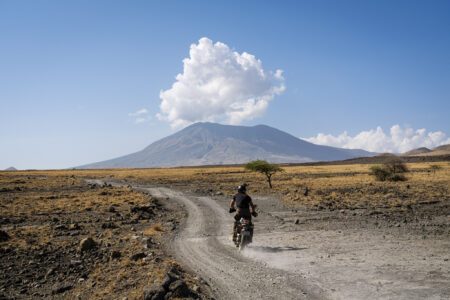
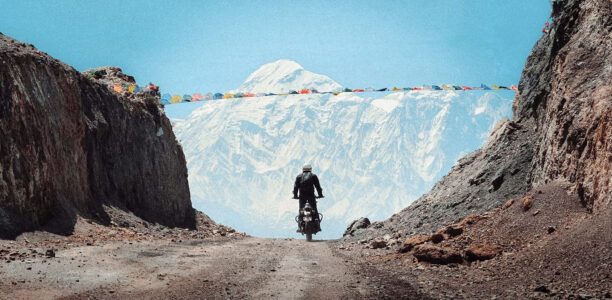
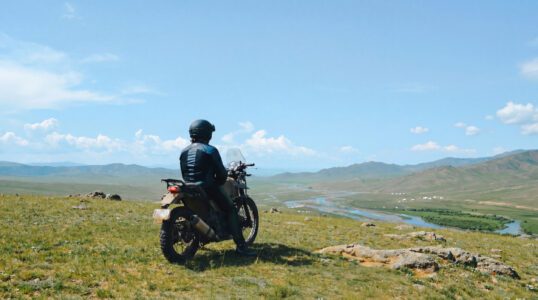
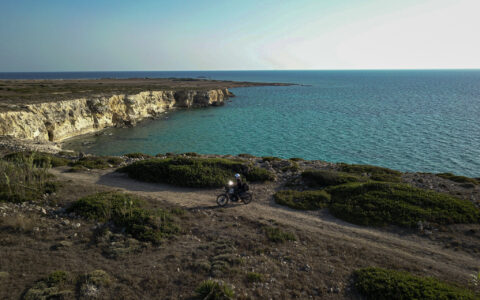
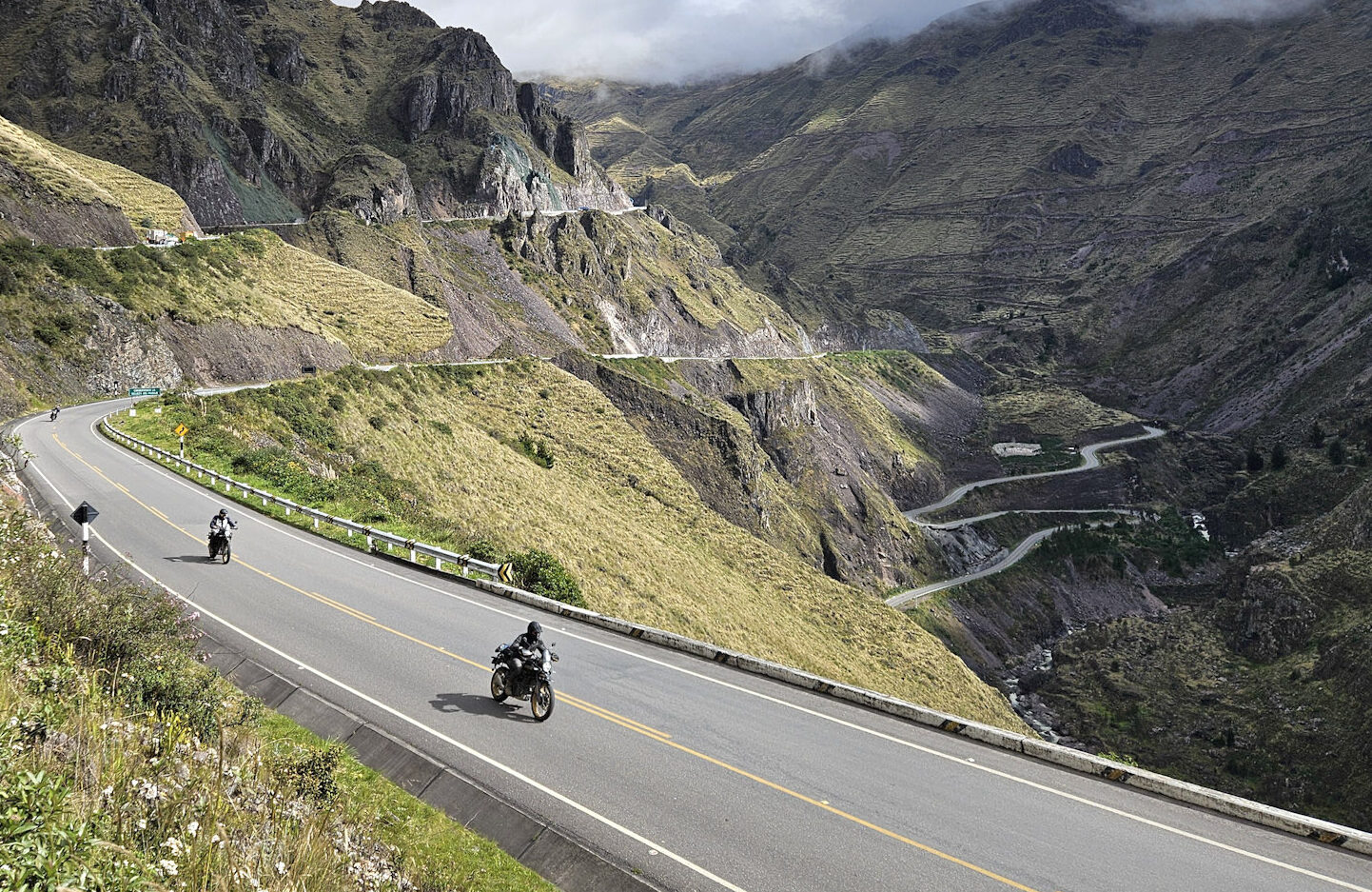
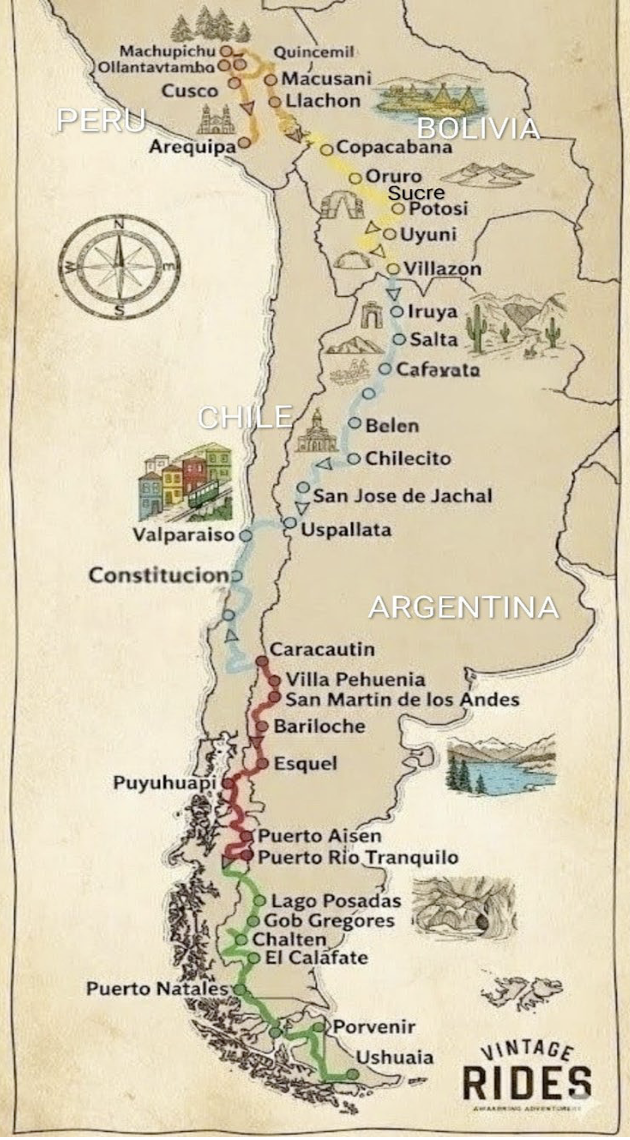
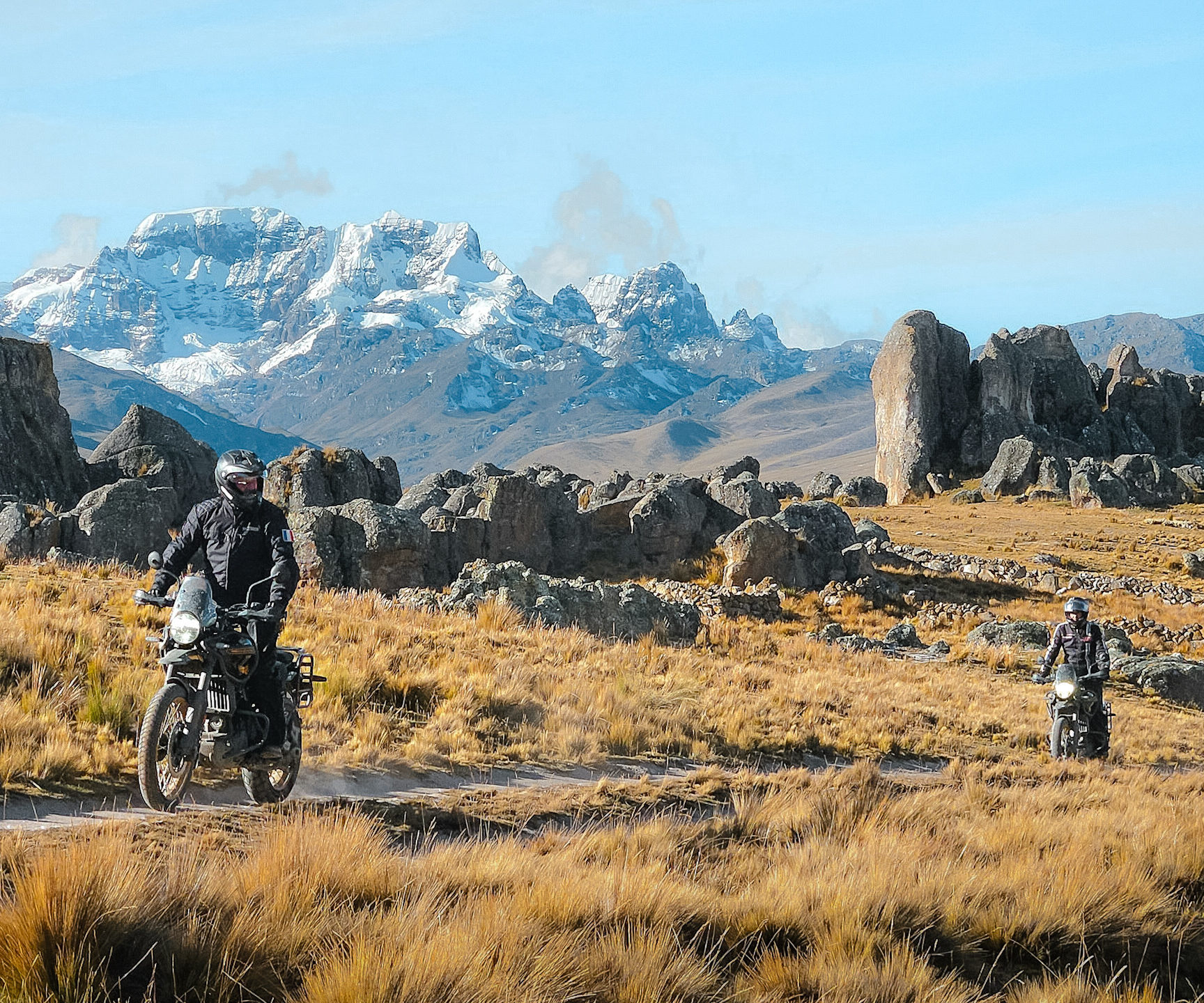
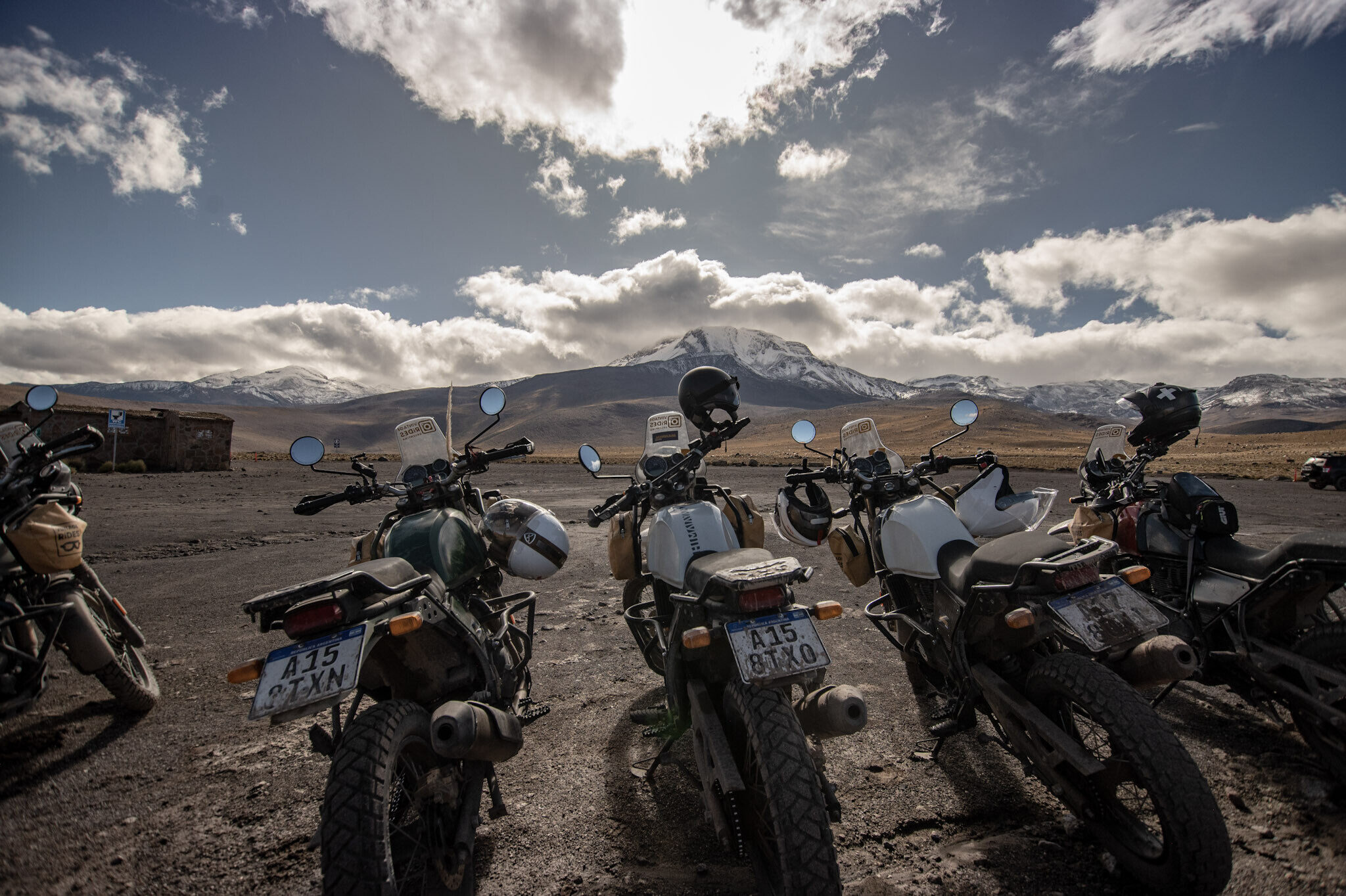
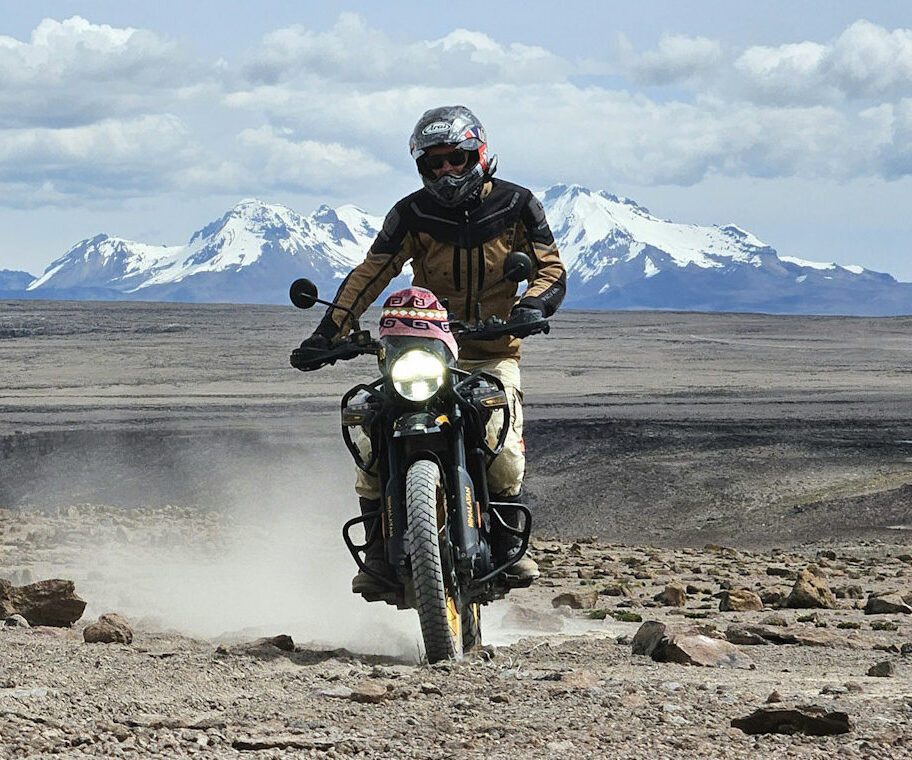
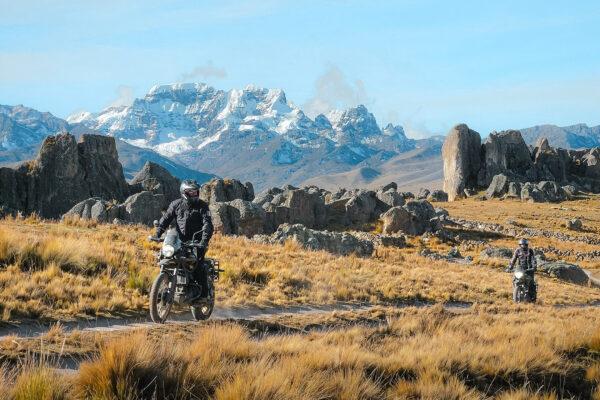
Welcome to Peru, in Arequipa, the "White City" dominated by the Misti and Chachani volcanoes. After discovering its UNESCO-listed center — the Plaza de Armas, the majestic cathedral, and the Santa Catalina monastery — the motorcycle adventure begins from Hotel Villa Elisa. Climbing toward the Salinas Reserve, asphalt soon gives way to dirt roads: a lunar-like landscape of salt lagoons and active volcanoes leads us across the Altiplano to Espinar, amidst alpaca herders.
The route then dives into history, winding through canyons and high-altitude lakes to reach Cusco, the navel of the world. After exploring its streets, we head to the Sacred Valley and the salt mines of Maras. We follow the Urubamba River to Ollantaytambo, where we stay facing the fortress and glaciers. From there, the Machu Picchu experience is a journey through time: its verdant terraces and stone temples suspended in the clouds showcase pre-Columbian genius.
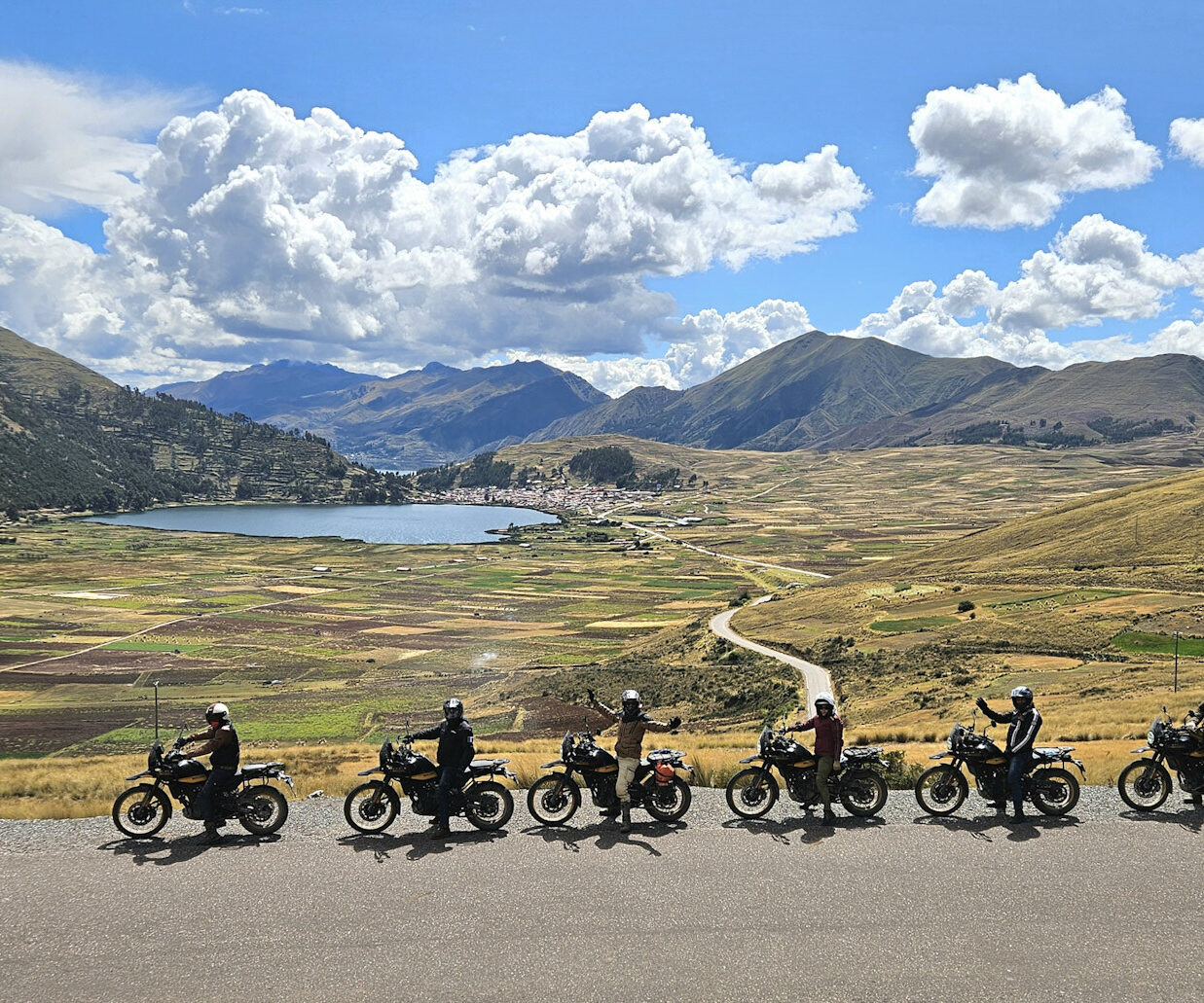
The scenery changes dramatically after a 15,026 ft pass: a breathtaking descent takes us into the humid Amazon at Quincemil. After a sensory immersion on a cacao farm, we climb from 1,903 ft to 14,041 ft through spectacular hairpin turns to Macusani, the "alpaca capital." Finally, crossing the raw Altiplano and its isolated villages, the deep blue of Lake Titicaca comes into view. We stop at Llachon, at the tip of a peninsula. A crossing to Taquile Island offers a final meditative and ancestral pause before continuing the adventure toward Bolivia.
Day 1: Arequipa → Salinas-Espinar – 150 mi (off-road: 106 mi)
Day 2: Espinar → Cusco – 149 mi (off-road: 43 mi)
Day 3: Cusco → Ollantaytambo – 60 mi (off-road: 22 mi)
Day 4: Machupichu → Machupichu – 0 mi
Day 5: Ollantaytambo → Quincemil – 196 mi (off-road: 22 mi)
Day 6: Quincemil → Macusani – 142 mi (off-road: 2 mi)
Day 7: Macusani → Llachon – 158 mi (off-road: 53 mi)
Day 8: Llachon → Llachon – 0 mi.
We leave Llachon, riding along the indigo shores of Lake Titicaca (12,507 ft) to reach the Bolivian border and its snow-capped mountains. A stop in Copacabana immerses us in local traditions before crossing the vast Altiplano to Oruro, where the smiles of the locals warm the atmosphere. The scenery then softens in the green valleys leading to Sucre, the "White City." This UNESCO-listed colonial gem offers a touch of elegance before the pilgrimage to Potosí. At over 13,123 ft, under the shadow of the mythical Cerro Rico, you swap your motorcycle helmet for a miner's helmet to explore the depths of the famous silver and gold mines.
The route to Uyuni crosses arid and wild plains. After passing the train cemetery, the landscape becomes surreal in front of the Salar de Uyuni, an endless salt ocean where we stay in a salt hotel. Exploring this giant mirror takes us to Incahuasi Island, crowned with giant cacti and llamas. Heading south through Tupiza and Villazón, the land turns ochre and blood-red as we approach the Argentine border.
The Quebrada de Humahuaca (UNESCO) then opens its doors: at the end of a winding path, the village of Iruya appears like a postcard in the heart of multicolored valleys. The descent is a symphony of colors, passing through the authenticity of Purmamarca and the traditions of northern Argentina. The final turns guide us to Salta, "la Linda." In this beautiful colonial city, we celebrate the stage with a traditional asado and folk music, ready for the next chapter of our adventure in gaucho lands.
Day 9: Llachon-Peru → Copacabana-Bolivia – 150 mi
Day 10: Copacabana → Oruro – 222 mi
Day 11: Oruro → Sucre – 204 mi
Day 12: Sucre → Potosi – 96 mi
Day 13: Potosi → Uyuni – 153 mi
Day 14: Uyuni → Uyuni – 0 mi
Day 15: Uyuni → Villazon – 194 mi (off-road: 17 mi)
Day 16: Villazon-Bolivia → Iruya-Argentina – 113 mi (off-road: 29 mi)
Day 17: Iruya → Salta – 196 mi (off-road: 37 mi)
Day 18: Salta → Salta – 0 mi.
Leaving Salta, we ride south into the vastness of Argentina, joining legendary stretches of Ruta 40. The scenery opens into endless high-altitude plateaus framed by red rock formations and distant Andean peaks. Crossing remote villages and arid valleys, the sense of freedom becomes absolute as the road stretches toward the horizon.
We gradually enter Patagonia: landscapes grow wider, winds stronger, and lakes appear like mirrors beneath snow-capped volcanoes. Crossing into Chile, the Andes reveal lush forests and deep blue lagoons. The riding alternates between sweeping asphalt curves and remote gravel sections, offering a perfect balance between flow and adventure.
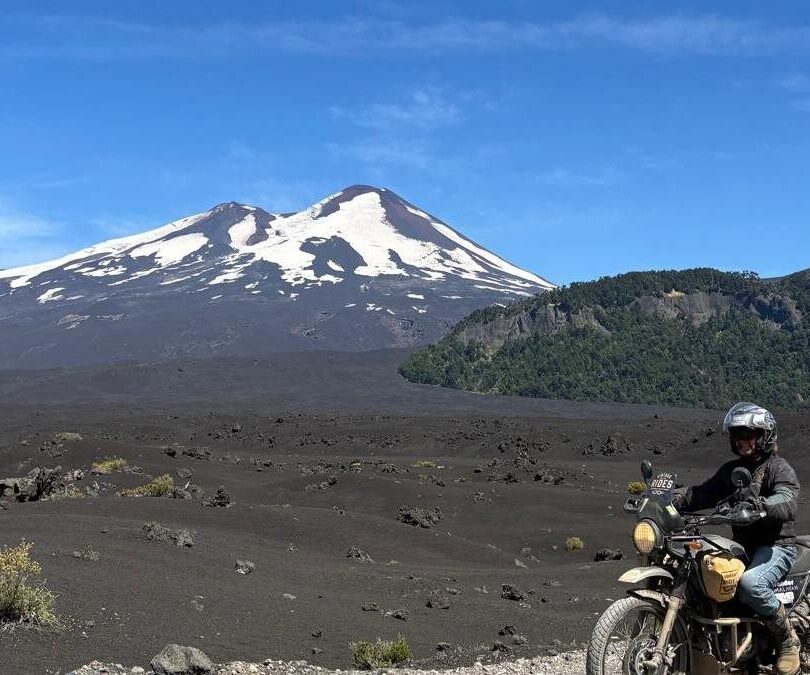
Approaching Caracautín, volcanoes dominate the skyline. At the foot of the Llaima Volcano (10,554 ft), dense Araucaria forests surround us. This region marks the gateway to Chile’s Lake District — a land of Mapuche culture, thermal springs, and dramatic volcanic scenery. A spectacular transition before heading deeper into wild Patagonia.
Day 19: Salta → Cafayate – 118 mi
Day 20: Cafayate → Belén – 155 mi
Day 21: Belén → Chilecito – 143 mi
Day 22: Chilecito → Villa Unión – 125 mi
Day 23: Villa Unión → San Juan – 174 mi
Day 24: San Juan → Malargüe – 273 mi
Day 25: Malargüe → Junín de los Andes – 280 mi
Day 26: Junín de los Andes → Caracautín – 186 mi (off-road: 31 mi)
Day 27: Caracautín → Caracautín – 0 mi.
From Caracautín, we dive into one of South America’s most scenic roads: the legendary Carretera Austral. The route winds through temperate rainforests, waterfalls, and glacial rivers. Volcanoes slowly fade behind us as Patagonia reveals its raw and untouched beauty.
Gravel sections become more frequent as we ride deeper south. Remote estancias, turquoise lakes, and snow-covered peaks create a constantly changing panorama. Each stage feels like an expedition, with long stretches of wilderness where condors circle above and guanacos roam freely.
Arriving in Puerto Río Tranquilo on the shores of General Carrera Lake (722 ft), we discover the famous Marble Caves — sculpted by centuries of waves into surreal white and blue formations. Facing the Northern Patagonian Ice Field, this stop is a highlight of the journey, where silence and immensity redefine the riding experience.
Day 28: Caracautín → Pucón – 87 mi
Day 29: Pucón → Valdivia – 108 mi
Day 30: Valdivia → Puerto Montt – 132 mi
Day 31: Puerto Montt → Hornopirén – 67 mi
Day 32: Hornopirén → Caleta Gonzalo – 56 mi (off-road: 25 mi)
Day 33: Caleta Gonzalo → Coyhaique – 217 mi (off-road: 93 mi)
Day 34: Coyhaique → Puerto Río Tranquilo – 139 mi (off-road: 190 mi)
Day 35: Puerto Río Tranquilo → Puerto Río Tranquilo – 0 mi.
The southernmost chapter begins as we continue along the Carretera Austral before crossing back into Argentina. The vast Patagonian steppe stretches endlessly, shaped by powerful winds and dramatic skies. Riding here is pure elemental adventure.
We reconnect with Ruta 40, crossing lonely plains and glacial valleys. Torres del Paine’s granite towers rise in the distance, while herds of sheep and wild horses dot the landscape. Gravel sections test both rider and machine, reinforcing the expedition spirit of this transcontinental journey.
Finally, we enter Tierra del Fuego. After crossing the Strait of Magellan and riding through windswept tundra, the road leads us to Ushuaia — the southernmost city in the world. Surrounded by the Beagle Channel and the Martial Mountains, this symbolic finish marks the end of 6,524 mi of riding across the Andes and Patagonia. An epic achievement at the edge of the world.
Day 36: Puerto Río Tranquilo → Gobernador Gregores – 192 mi (off-road: 118 mi)
Day 37: Gobernador Gregores → El Calafate – 198 mi
Day 38: El Calafate → Torres del Paine – 168 mi (off-road: 50 mi)
Day 39: Torres del Paine → Cerro Castillo – 75 mi
Day 40: Cerro Castillo → Punta Arenas – 155 mi
Day 41: Punta Arenas → Río Grande – 220 mi
Day 42: Río Grande → Ushuaia – 132 mi
Day 43: Ushuaia → Ushuaia – 0 mi.
A Royal Enfield Himalayan 450 motorcycle.
A French- and English-speaking motorcycle guide (on riding days).
A support vehicle for luggage and assistance with a driver and mechanic. The vehicle can accommodate 1 motorcycle passenger when strictly necessary.
Meals (estimated 40 euros/day).
Fuel (estimated 15 euros/day).
Entrance fees to parks, museums, and other historical sites (approximately 290 euros for Machu Picchu).