 +442070316050











Every year in the Hindu month of Kartik, in October or November, the small holy town of Pushkar, in Rajasthan, becomes the stage for the largest camel fair in the world. For about a week before the full moon, tens of thousands of camels, horses and cattle, with their herders, traders, pilgrims and travellers from all over the world, gather on the sand dunes at the edge of town.
Where is Pushkar?
Pushkar sits in the Aravalli hills, a few miles from Ajmer and about 93 miles (150 km) south-west of Jaipur. It is one of the oldest towns in India and one of the holiest places in Hinduism, built around a sacred lake lined with 52 ghats, the stone steps where pilgrims come to bathe. Outside the fair, it is a quiet town of white temples, narrow lanes and rooftop cafés.
Camels, herders and the livestock market
The heart of the fair is the trading ground on the dunes. Herding families, many of them Raika, the camel breeders of Rajasthan, travel for days with their animals to buy and sell. The camels are groomed, clipped into patterns and decorated with jewellery, bells and bright fabric, and every deal is negotiated at length, often over a glass of chai. Herders are welcoming, and it is easy to spend an hour in their tents watching the bargaining.
Moustache contests, camel races and a carnival
Around the market, the fair turns into a huge carnival: fairground rides, folk music and dance, camel races and camel decoration contests, turban tying and the famous longest moustache competition. The colours of the saris and turbans, and the light on the dunes at dawn and dusk, make it one of the most photographed events in India.
The Brahma temple and the holy lake
Pushkar is home to one of the very few temples in the world dedicated to Brahma, the god of creation. The fair ends on Kartik Purnima, the full moon, when crowds of pilgrims bathe in the lake at first light. Pushkar is a holy town: alcohol and meat are not served, shoes come off on the ghats, and it is polite to ask before photographing anyone bathing.
Tips for visiting the fair
- The dates follow the lunar calendar and change every year: they are published by Rajasthan Tourism.
- Come early in the week for the camel trading, which winds down as the religious festival reaches its peak.
- Rooms and camps fill up months in advance, and prices rise during the fair.
- Early mornings and late afternoons are the best times to wander the dunes.
Pushkar on a motorcycle tour
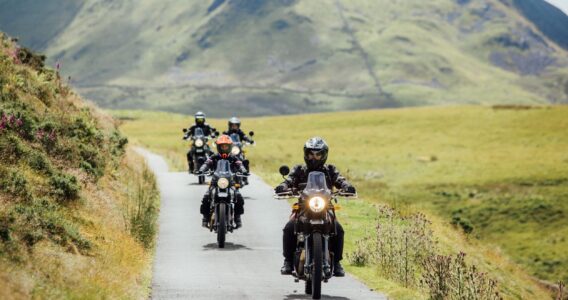
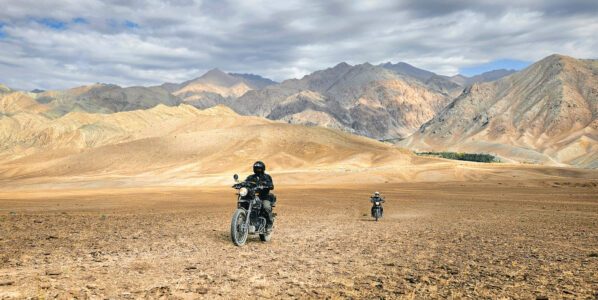
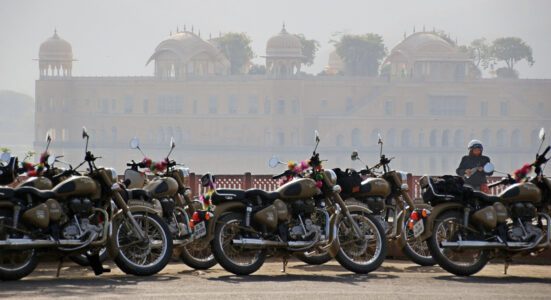
Both our Rajasthan motorcycle tours ride into Pushkar on a Royal Enfield. On Rajasthan Adventure (11 days, from £2,190 (€2,490)), you reach it from Jaipur across the Sambhar salt lake and sandy tracks; on The Land of Maharajas (13 days, from £2,490 (€2,790)), you arrive from the painted havelis of Shekhawati. Our November departures can coincide with the fair, depending on the lunar calendar: ask us which one does.
More from Rajasthan on our blog: New Year with the Rajputs and Margot’s ride from Rajasthan to South India.




 France
 United States
 United Kingdom
 Deutschland
 Euro (€)
 British Pound (£)


