 +442070316050


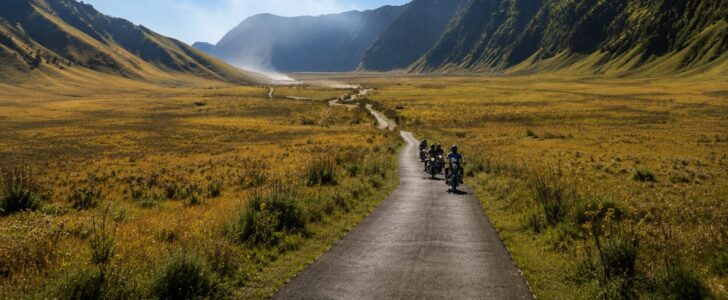
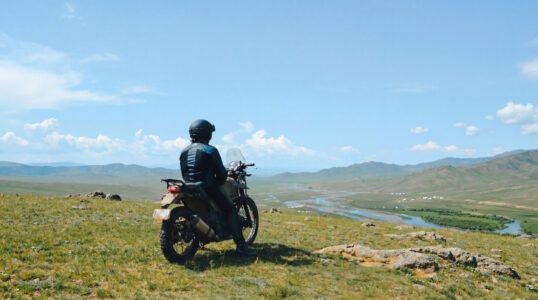

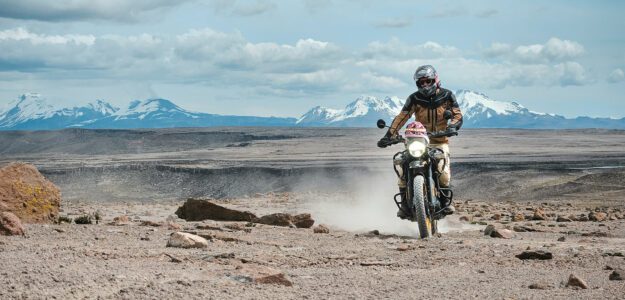


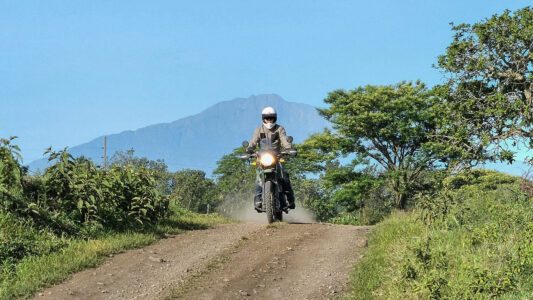

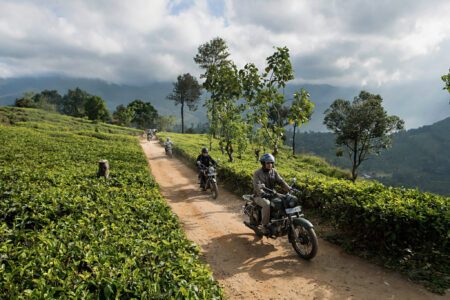
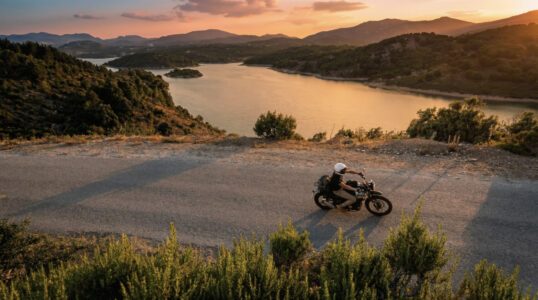

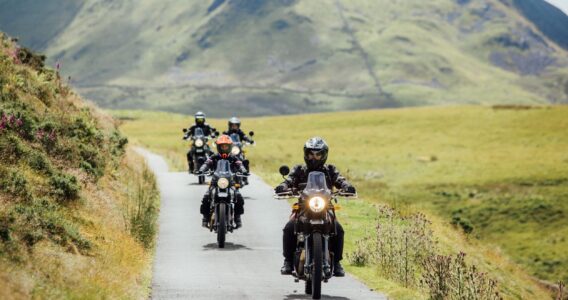




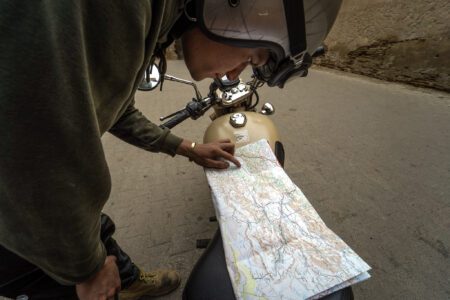


Few roads in Asia have built a reputation as fast as the Ha Giang Loop, a ride through the karst mountains on the Chinese border that has become the most talked-about motorbike trip in Vietnam. Our team rides it every spring and autumn, and it still stops us in our tracks. Here is a rider’s guide to it: the route with a map, how many days to plan, when to go, the passes worth the detour, and what you need to know about licences and safety before you set off.
What is the Ha Giang Loop?
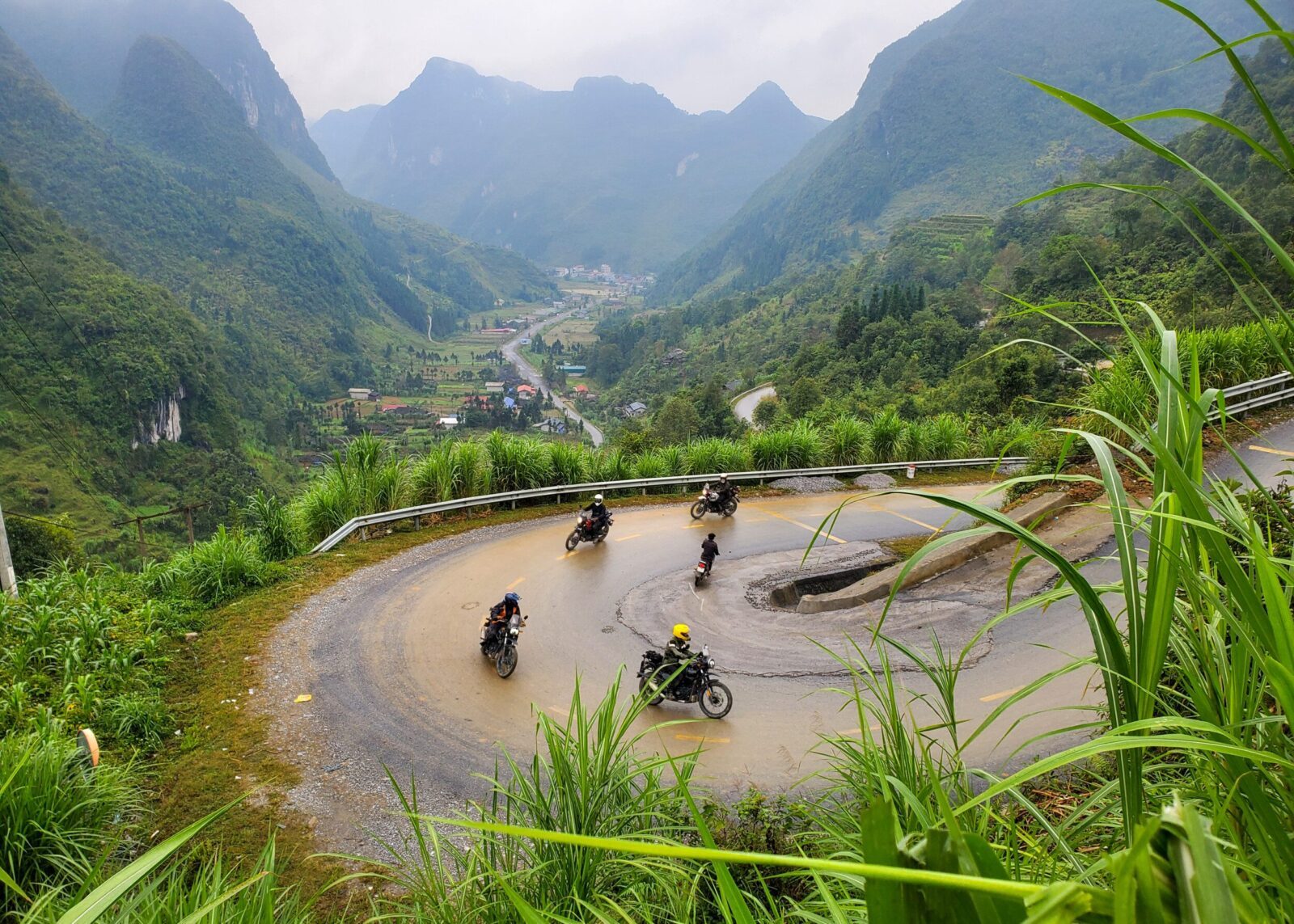
The Ha Giang Loop is a circuit of about 220 miles (360 km) that starts and ends in the town of Ha Giang, in the far north of Vietnam. It climbs onto the Dong Van Karst Plateau, a UNESCO Global Geopark of grey limestone peaks, deep valleys and terraced fields, where Hmong, Dao and Tay villages cling to the slopes. The road runs within a few miles of China, crosses some of the highest passes in the country and reaches the northernmost point of Vietnam at Lung Cu.
Ha Giang town is about 185 miles (300 km) north of Hanoi, six to seven hours by bus or car. Since the 2025 reform of Vietnam’s provinces, Ha Giang has been part of Tuyen Quang province, but riders and guidebooks still talk about the Ha Giang Loop.
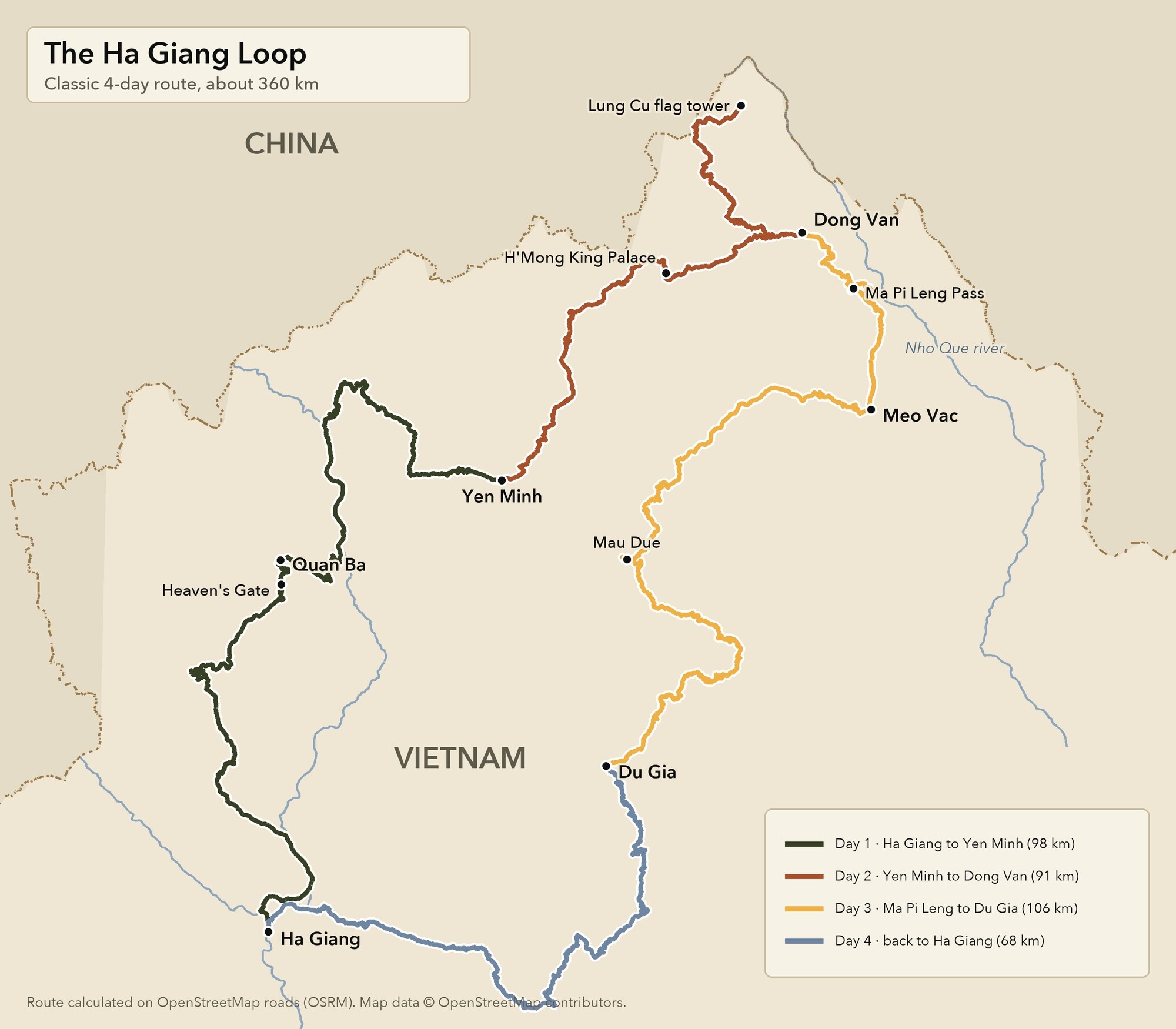
Ha Giang Loop map and route
The classic loop runs anticlockwise over four days: north through Quan Ba and Yen Minh to Dong Van, east over the Ma Pi Leng Pass to Meo Vac, then south and west back to Ha Giang through Du Gia. The distances below were calculated on the actual roads; your total will grow with every detour.
| Day | Stage | Distance | Highlights |
|---|---|---|---|
| 1 | Ha Giang to Yen Minh | 61 miles (98 km) | Heaven’s Gate at Quan Ba, first karst valleys |
| 2 | Yen Minh to Dong Van | 57 miles (91 km) | Tham Ma hairpins, H’Mong King Palace, Lung Cu flag tower |
| 3 | Dong Van to Du Gia | 66 miles (106 km) | Ma Pi Leng Pass, Nho Que river, Meo Vac |
| 4 | Du Gia to Ha Giang | 42 miles (68 km) | Rice fields, Du Gia waterfall, quiet back roads |
How many days do you need?
Three days is possible, and many backpacker tours sell it that way, but it means long hours in the saddle on slow roads. Four days is the comfortable minimum for the classic route, with time to stop at the viewpoints and the markets. With five or six days, you can add Lung Cu, a full morning on the Ma Pi Leng Pass and a night in Du Gia without rushing. Plan on an average of 20 to 25 mph (30 to 40 km/h): the roads are narrow, steep and shared with trucks, buffaloes and children walking home from school.
The loop, stage by stage
Ha Giang to Yen Minh: through Heaven’s Gate
The first climb starts as soon as you leave Ha Giang. After about 28 miles (45 km), the road reaches Heaven’s Gate, a pass at around 4,900 feet (1,500 metres) above Quan Ba, and the gateway to the karst plateau: below you, a valley of cone-shaped hills that looks like nothing else in Vietnam. The road then winds north-east through pine forests and small Hmong villages to Yen Minh, a market town in a green valley where most riders spend the first night.
Yen Minh to Dong Van: palaces and the northern tip
The second day crosses the heart of the geopark. The hairpins of the Tham Ma slope are a favourite photo stop. At Sa Phin, the H’Mong King Palace, built in the early twentieth century for the Vuong family who ruled the region, is worth an hour. With time to spare, take the side road north to the Lung Cu flag tower, near the northernmost point of Vietnam, before riding into Dong Van, whose old quarter of stone houses comes alive on Sunday market day.
Dong Van to Du Gia: the Ma Pi Leng Pass
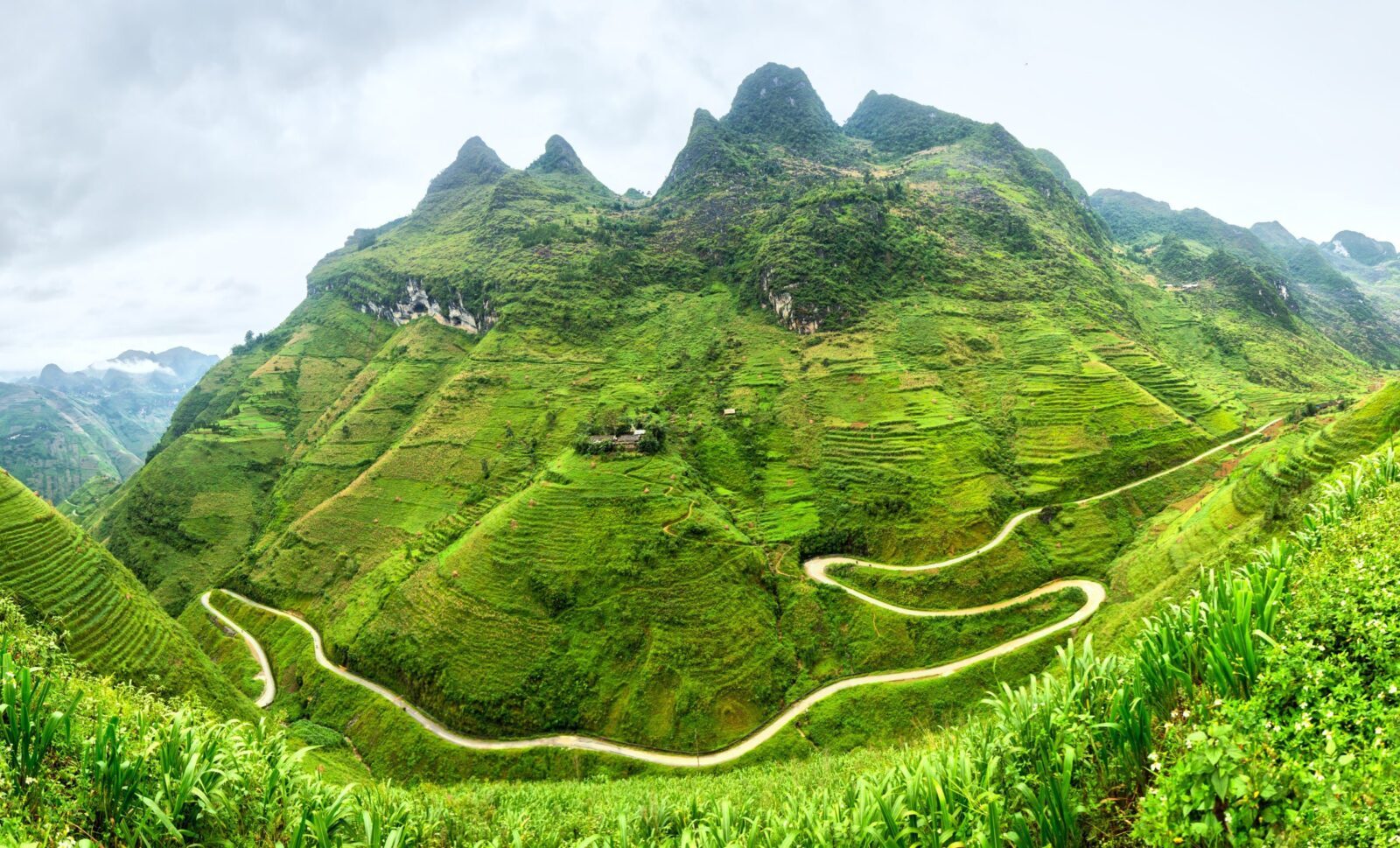
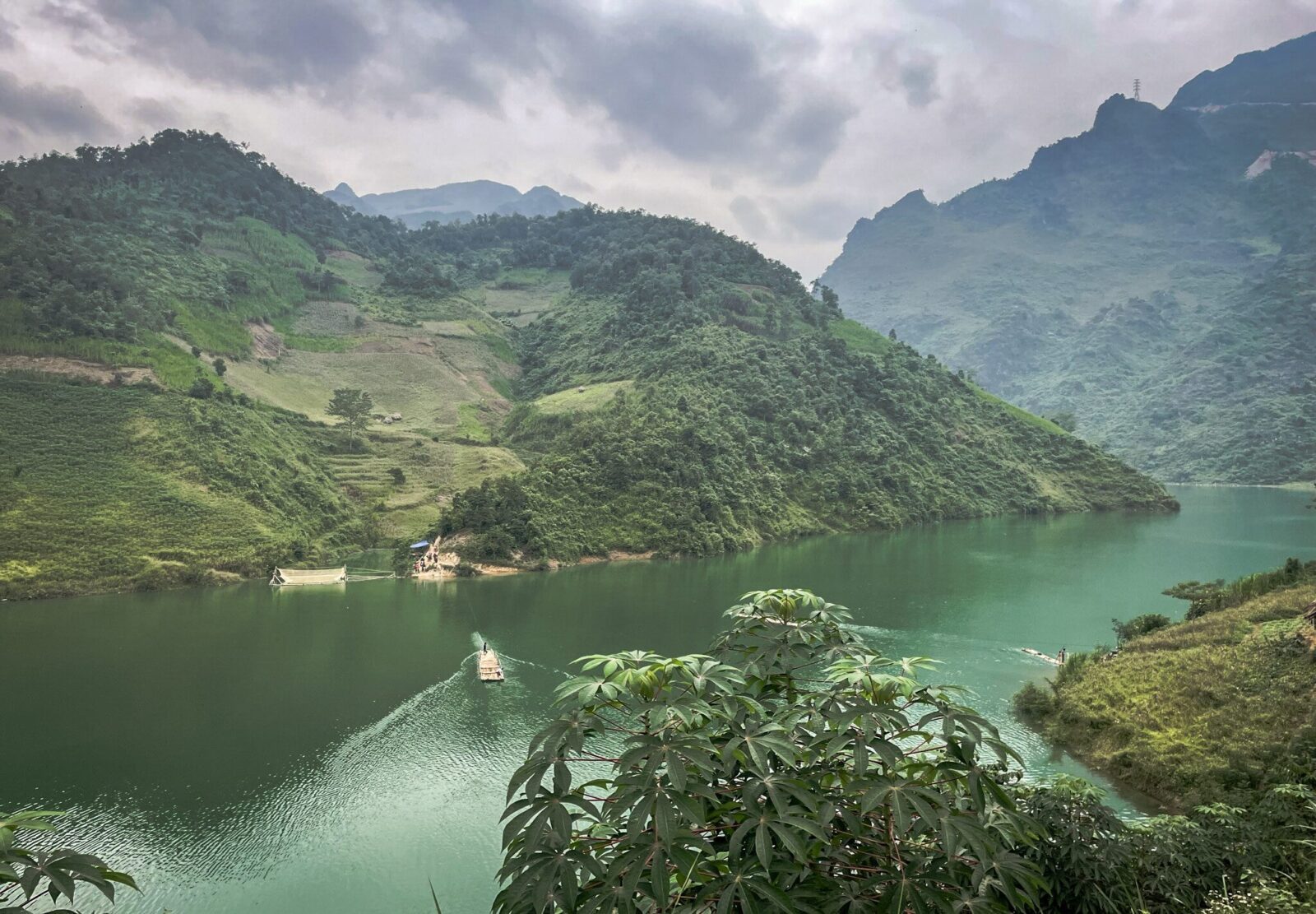
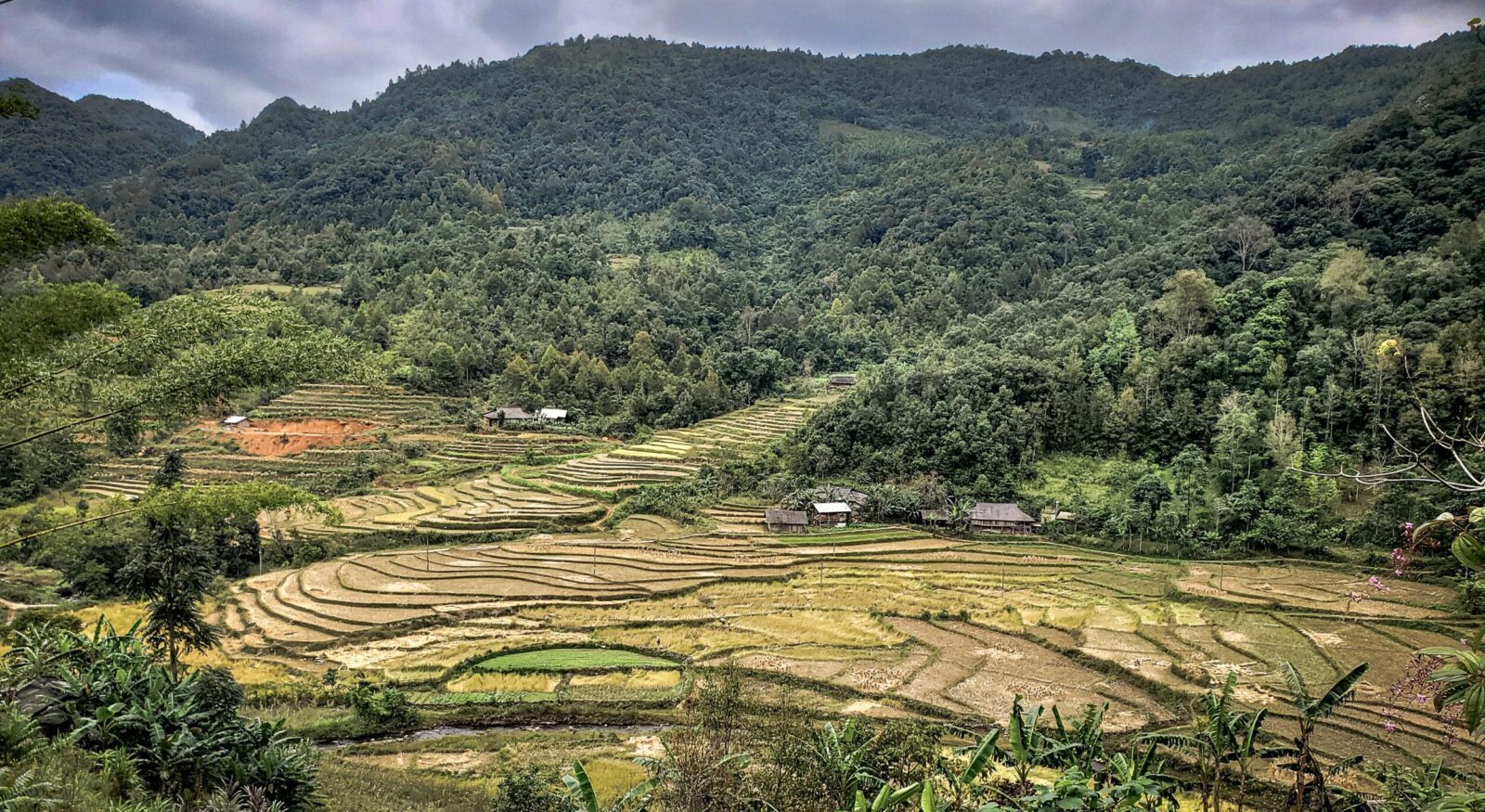
This is the day everyone comes for. Between Dong Van and Meo Vac, the road clings to the cliffs of the Ma Pi Leng Pass, high above the Nho Que river and the Tu San canyon, with a drop of hundreds of metres to the emerald water below. It is part of the Happiness Road, built largely by hand by young volunteers in the 1960s to open up this remote province. Ride it early, before the minibuses, and stop often: the views change at every bend. After Meo Vac, a quieter road heads south-west through Mau Due to Du Gia, a village of rice fields and stilt houses with a waterfall to swim under.
Du Gia to Ha Giang: the back roads home
The last stage is the shortest. Small roads follow the valleys between rice fields and cornfields before rejoining the main road to Ha Giang. Leave time for the morning in Du Gia: it is one of the few places on the loop that still feels untouched by tourism.
Best time to ride the Ha Giang Loop
The best seasons are autumn and spring. From late September to November, the skies are clear and the rice terraces turn gold before the harvest; in October and November, the pink buckwheat flowers cover the slopes around Dong Van. From March to May, the days are mild and the hills green again. These are the months we ride.
Winter, from December to February, brings fog and cold: nights on the plateau can drop close to freezing, and the passes may disappear in the cloud for days. The rainy season, from June to August, is the greenest time of year, but heavy downpours bring landslides and mud on the roads, and some stretches close for hours. Whatever the month, pack a warm layer and a rain jacket: the weather on the plateau changes fast.

Is the Ha Giang Loop dangerous?
It is not dangerous for an experienced rider who takes it seriously, but it is not a beginner’s road. The main risks are the road itself and the traffic on it: narrow lanes with blind bends, steep descents, gravel and mud after rain, trucks and buses that take the whole width of the road on the passes, and fog that can reduce visibility to a few metres in winter. Many accidents involve travellers who rent a bike in Ha Giang having barely ridden before.
- Ride on the right, and expect the unexpected. Vietnam drives on the right. Sound your horn before blind corners, as local drivers do, and keep a margin for the truck coming the other way.
- Use engine braking on the descents. Some grades are very steep; riding the brakes all the way down overheats them.
- Ride in daylight only. Night falls early in the mountains and the roads are not lit.
- Wear real protective gear. A helmet is compulsory, and gloves, a jacket and boots make all the difference if you go down on gravel.
Licence and paperwork
To ride legally in Vietnam, you need your full motorcycle licence and an International Driving Permit issued under the 1968 Vienna Convention. UK riders can get the 1968 permit at the Post Office; bring both documents. Permits from countries that have not signed the 1968 convention, such as the United States, Canada and Australia, are not recognised. Riding without a valid licence is common on the loop, and it is the surest way to find that your travel insurance will not cover you after an accident.
Self-drive, Easy Rider or guided motorbike tour?
There are three ways to do the Ha Giang Loop. Many travellers self-drive, renting a semi-automatic or manual bike in Ha Giang and finding their way with a phone; it is the cheapest option and the one that suits experienced riders who are happy to handle a puncture or a breakdown far from a town. The most popular option is the Easy Rider tour: you sit on the back of a bike ridden by a local driver, usually for three or four days in a group. It is safe and sociable, but you are a passenger, not a rider.
The third option is a guided motorbike tour, where you ride your own motorcycle with a tour leader in front and a mechanic and a support vehicle behind. That is how we ride it: you do not carry your luggage, you do not look for a hotel at the end of the day, and you leave the busiest stretches to the minibuses to take the small roads our team has scouted over the years.
Our Ha Giang Loop motorcycle tour
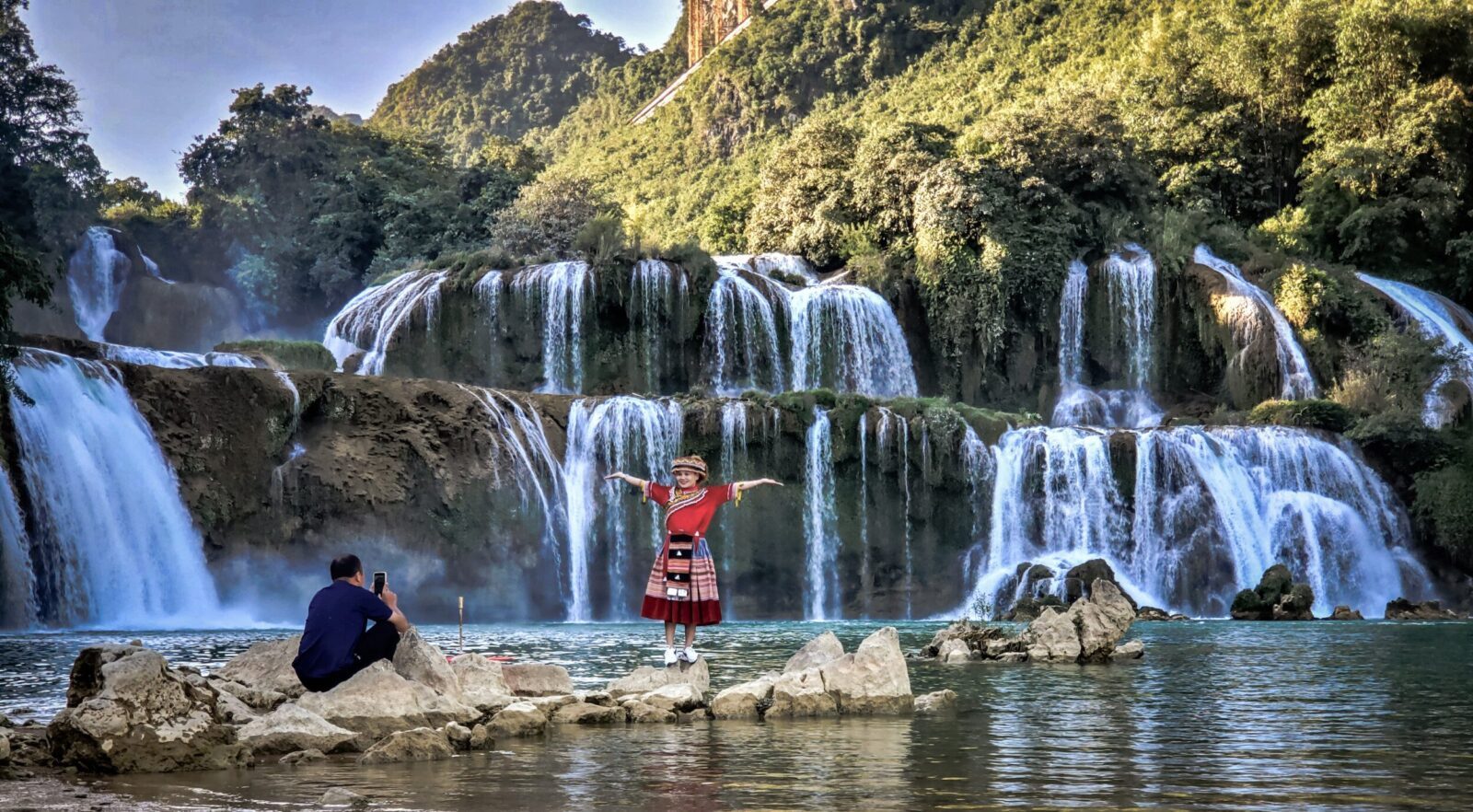
Our Ha Giang Loop motorcycle tour, Across the Mountain Passes of Ha Giang, takes 12 days from Hanoi and covers about 912 miles (1,410 km), from £2,990 (€3,430). It rides more than the classic loop: the rice terraces of Hoang Su Phi on the way up, Heaven’s Gate, Dong Van and a full day on the Ma Pi Leng Pass and the Happiness Road, the Sunday markets of Dong Van and Meo Vac, then east along the Chinese border to the Ban Gioc waterfalls, the karst landscapes of Cao Bang and a boat trip on Ba Be lake before returning to Hanoi.
You ride a Royal Enfield Himalayan 411, with an English-speaking tour leader, a mechanic and a support vehicle, and full board on riding days. The tour is rated Intermediate, with about 10% on easy tracks, and departs in spring and autumn. For a gentler first taste of the country, The Jungles and Shores of Central Vietnam rides the jungle and the coast of the centre. Compare all our Vietnam motorcycle tours.
Ha Giang Loop FAQ
How long is the Ha Giang Loop?
About 220 miles (360 km) for the classic four-day route from Ha Giang through Quan Ba, Yen Minh, Dong Van, Meo Vac and Du Gia. Detours to Lung Cu or Hoang Su Phi add more.
How many days do you need for the Ha Giang Loop?
Four days is the comfortable minimum, five or six if you want to add the side roads and ride the Ma Pi Leng Pass without rushing. Add a day each way to get from Hanoi to Ha Giang.
Can I ride the Ha Giang Loop on a UK licence?
Yes, with a full motorcycle licence and a 1968 International Driving Permit from the Post Office. Without them, you are riding illegally and your insurance is unlikely to pay out.
When is the best time to ride the Ha Giang Loop?
Late September to November, for clear skies, golden rice and buckwheat flowers, and March to May, when the hills are green and the days mild. Avoid the rainy season from June to August, and expect cold and fog in winter.
Is the Ha Giang Loop worth it?
For a rider, without doubt. Few roads anywhere combine such dramatic mountains with such a living culture. If you like it, ride its cousin across the border in Thailand: our guide to the Mae Hong Son Loop covers another legendary loop of Southeast Asia, and the 3 most beautiful motorcycle roads in Asia puts Ha Giang at the top of the list.








 France
 United States
 United Kingdom
 Deutschland
 Euro (€)
 British Pound (£)


