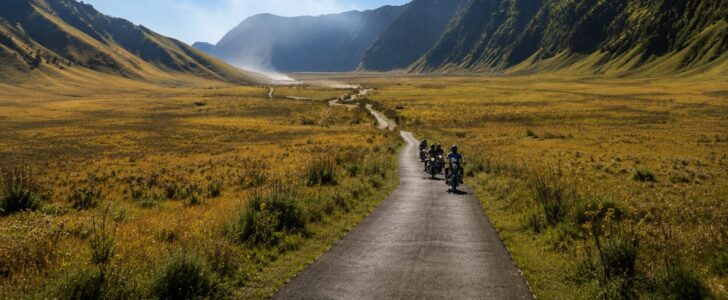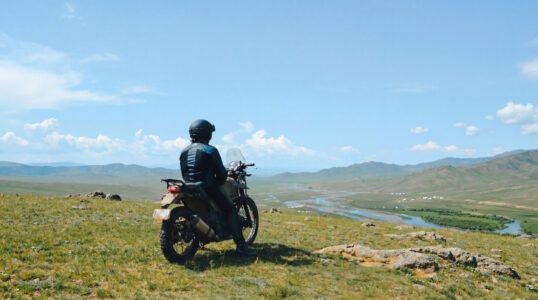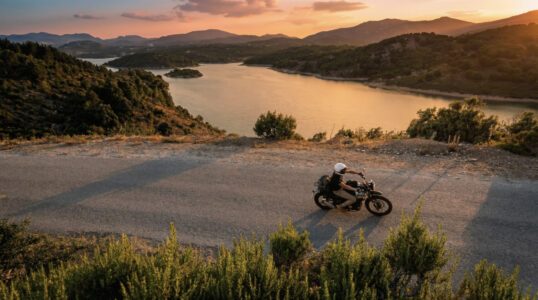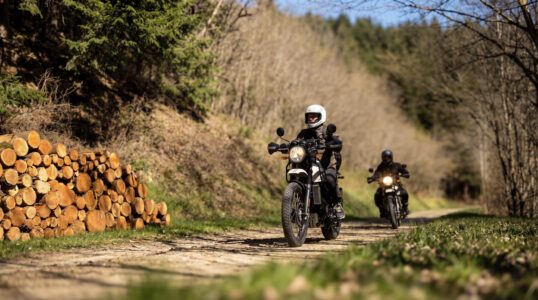
Embark on a spectacular ride through the stunning landscapes of Northern Vietnam with the "North Vietnam: Across the Mountain Passes of Ha Giang" tour. This adventure takes you through winding mountain roads, lush valleys, and vibrant local markets. Experience the rich cultural diversity of Vietnam’s ethnic minorities and the awe-inspiring scenery of the Ha Giang region. Each turn offers new views and cultural encounters, making this journey a memorable exploration.
From design to completion, Vintage Rides humanizes travel. Over 15,000 of you have experienced it around the world.
See all reviewsVietnam has become one of the most rewarding countries in Asia to explore by motorcycle: winding mountain roads in the far north, rice terraces carved into the hillsides, karst peaks around Ha Giang and villages where daily life still follows the seasons. Its cities, starting with Hanoi, are a whirlwind of street food, scooters and centuries-old temples.
We do not currently run motorcycle tours in Vietnam for riders booking from the United States. If you are dreaming of riding in this part of the world, browse our motorcycle tours in Asia, from the Himalaya to Southeast Asia.
Vietnam stretches more than 1,000 miles from north to south, so the best season depends on the region. In the mountainous north, the most pleasant months are October and November, then March to May: clearer skies, golden rice terraces in the fall and comfortable temperatures. Winters there are cool and damp, often below 50°F at altitude in December and January. Central Vietnam is driest from February to August, while the south has its dry season from December to April. Average temperatures run around 73°F in Hanoi and close to 80°F in Ho Chi Minh City. Summer brings the monsoon to much of the country, with heavy rain in the north, and typhoons can hit the central coast in the fall.
Vietnam shares borders with China, Laos and Cambodia, and its long S-shaped outline is often compared to a dragon, a symbol of strength. The country falls into three broad regions: Bac Bo in the north, Trung Bo in the center and Nam Bo in the south. A narrow coastal plain links the Red River Delta in the north to the Mekong Delta in the south.
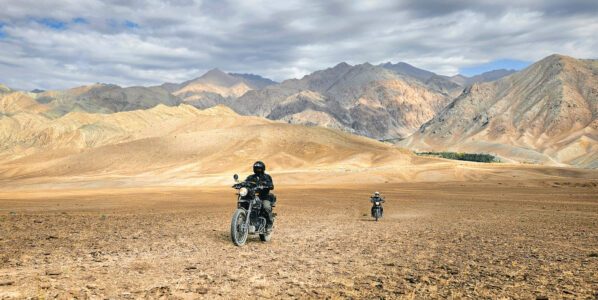
Three quarters of the country is covered by mountains and hills. The highest point is Fansipan (10,312 ft, 3,143 m), in the northwest. The mountains of the north offer the most spectacular riding, from the twisty roads around Sapa to the coffee plantations, rice fields and karst mountains of Ha Giang province. Close to the Chinese border live several ethnic minorities, among them the Hmong, Dao and Tay, many of whom welcome travelers in their stilt houses. Running from north to south, the Ho Chi Minh Trail links a network of historic roads and tracks used during the wars of the 20th century.
Scarred by decades of war, Vietnam has rebuilt itself with remarkable energy. On the road you pass ancient imperial cities, fast-growing modern cities and sacred temples, and you meet a young, connected generation alongside ethnic groups with ancestral traditions. After centuries of Chinese domination and rival dynasties, the Nguyen dynasty unified the country in 1802 and made Hue its capital. In 1858, French forces attacked Da Nang; within a decade, Cochinchina in the south had become a French colony, and Annam in the center and Tonkin in the north later became protectorates. In 1887, they were joined with Cambodia, and later Laos, in French Indochina.
Ho Chi Minh proclaimed independence in Hanoi in 1945, and France’s attempt to return led to the First Indochina War. After the French defeat at Dien Bien Phu in 1954, the Geneva Accords divided the country at the 17th parallel. American involvement in the South grew through the early 1960s, and US combat troops arrived in 1965. On April 30, 1975, North Vietnamese forces entered Saigon, later renamed Ho Chi Minh City, and the country was reunified in 1976 as the Socialist Republic of Vietnam. Since the Doi Moi reforms of 1986, Vietnam has opened its economy and become one of the most dynamic countries in Southeast Asia.
Not on our US site at the moment: there is no Vietnam departure open to book here. If Vietnam is on your list, request a quote from this page and our team will tell you what is possible. The closest rides we offer are our guided tours in Laos and Thailand, which start in Chiang Mai with a Vintage Rides tour leader, a mechanic and our own Royal Enfield motorcycles.
Very varied from north to south. The far north, along the Chinese border, is mountain country: the Ha Giang loop, the Ma Pi Leng pass, narrow roads, hairpins and hill-tribe villages. The center combines the Hai Van pass, the imperial city of Hue and the Ho Chi Minh Road through the jungle. The south is flat, around the Mekong Delta. Most roads are paved, but mountain sections can be broken and slippery in the rain.
It depends on the region. In the northern mountains, spring (March to May) and fall (September to November) are the best riding seasons, between the summer rains and the cold, misty winter. The central coast is driest from about February to August, then gets heavy rain and storms in the fall. The south is warm all year, with a dry season from about December to April.
US passport holders need a visa, usually the e-visa applied for online before you travel, and an online pre-arrival registration is required. The permit is the catch: Vietnam only recognizes International Driving Permits issued under the 1968 Vienna Convention, and US permits fall under the 1949 Geneva Convention, so they are not valid there. Check the latest rules in Preparing your trip to Vietnam, in our help center.
By air, booking your own flights. The main international airports are Hanoi in the north, Ho Chi Minh City in the south and Da Nang in the center. From the US, most itineraries connect at least once in Asia, so plan for a long travel day and, before any ride, arrive a day early to get over the jet lag.
The main risk is the traffic: dense streams of scooters, trucks and constant horns, especially in and out of the cities, with drivers who do not always yield. Traffic drives on the right, as in the US. Some mountain roads are far from hospitals. Before you go, read the State Department travel advisory and country information for Vietnam and enroll in STEP.
Not with Vintage Rides: we do not rent motorcycles in Vietnam, and our tours in Southeast Asia are guided, with a tour leader, a mechanic and hotels booked. Our self-guided trips, with motorcycle, hotels and road book included, run in the United States, from our base in South Dakota.