 +17603509700


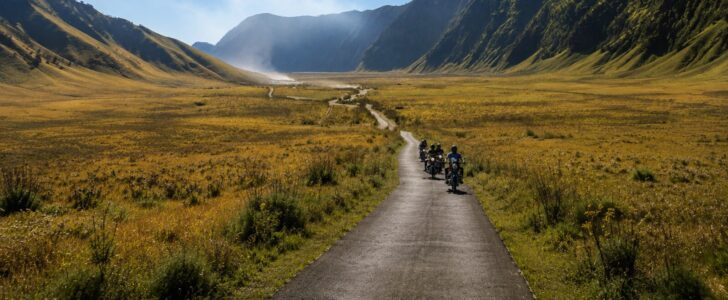
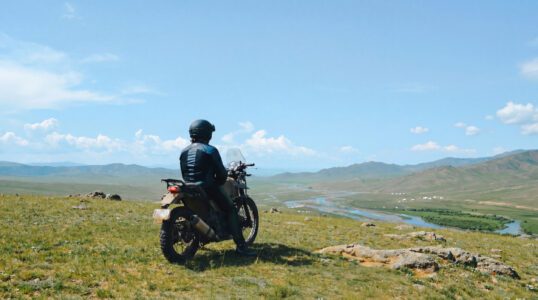


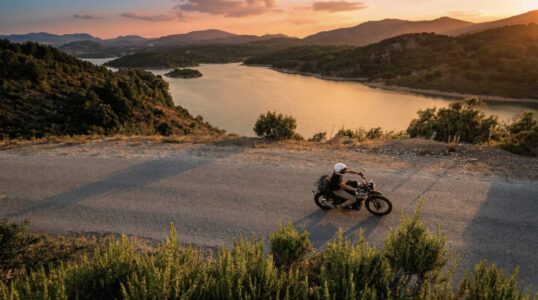

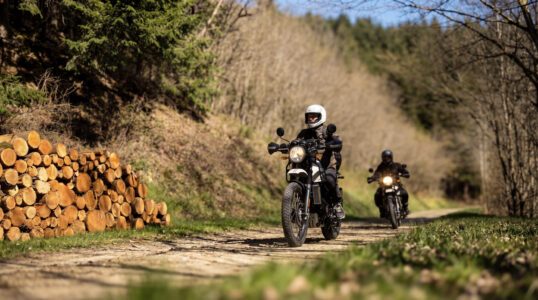




One film a year, one new land
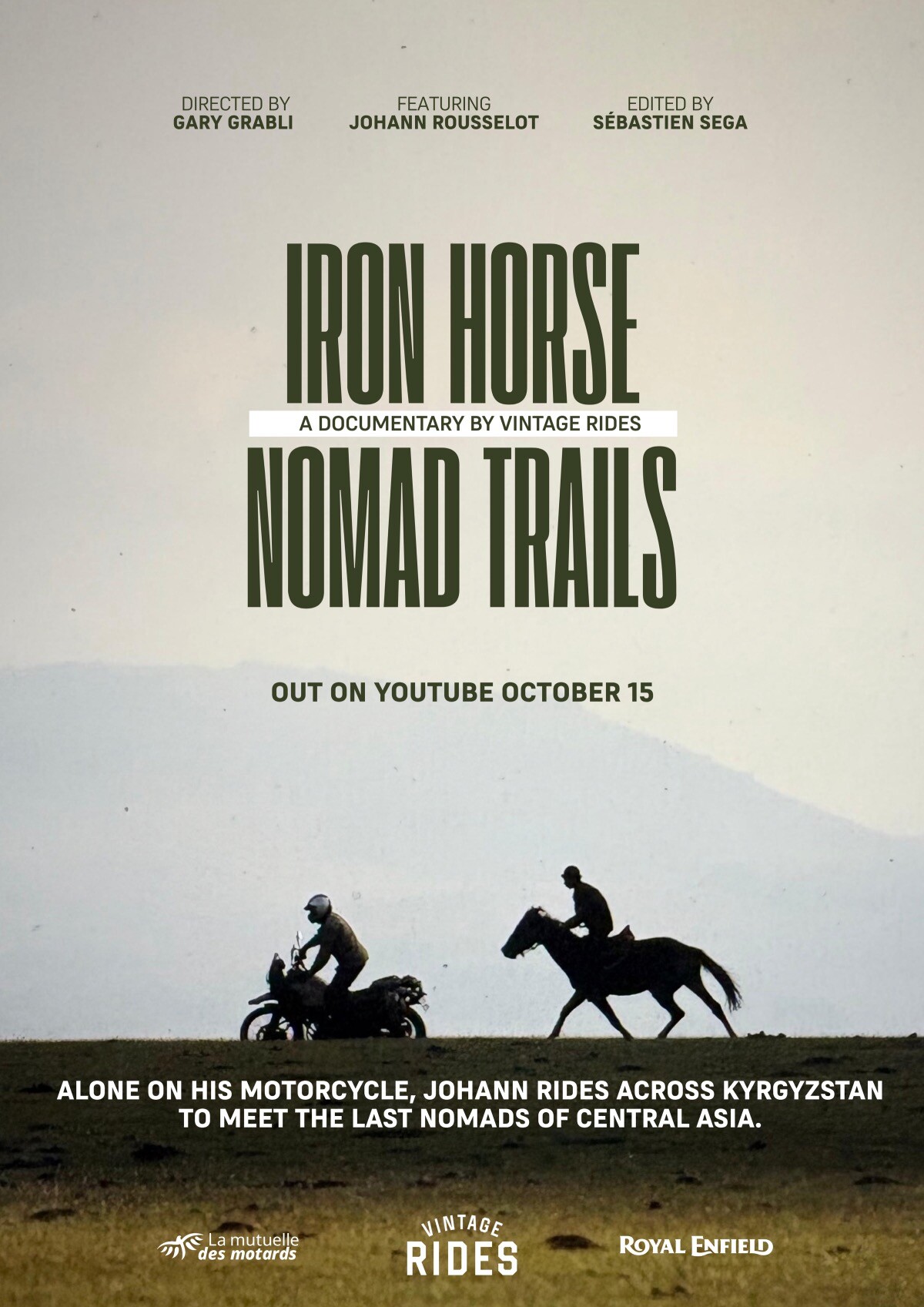
Every year, Vintage Rides shoots a documentary film in a new destination. After Turkey, then Madagascar and “Ride To The Roots,” we headed for Central Asia. The idea never changes: tell a human adventure rather than a catalog of landscapes.
The film was shot on the Royal Enfield Himalayan 450, with the support of our long-standing partners Royal Enfield and Mutuelle des Motards, and with gear from Brett, Veldt, and Bolid’ster.
Why Kyrgyzstan?
The idea goes back to 2019. At the end of a season in Mongolia, François Combes, one of our longest-standing guides, set off west. He crossed the Russian Altai, then eastern Kazakhstan by way of Charyn Canyon, and mapped out a first route through northern Kyrgyzstan. The country never left his mind.
On paper, it has everything an adventure motorcycle trip needs: mountains across almost the whole territory, tracks as far as the eye can see, passes above 10,000 ft and a nomadic culture that is still very much alive, a cousin of the one our riders love on our motorcycle tours in Mongolia. And tourism is only just beginning. “The country is still very much itself, really raw,” says Johann. “They’re not really used to tourists yet. Even for them, it’s something new.”
What is a recon?
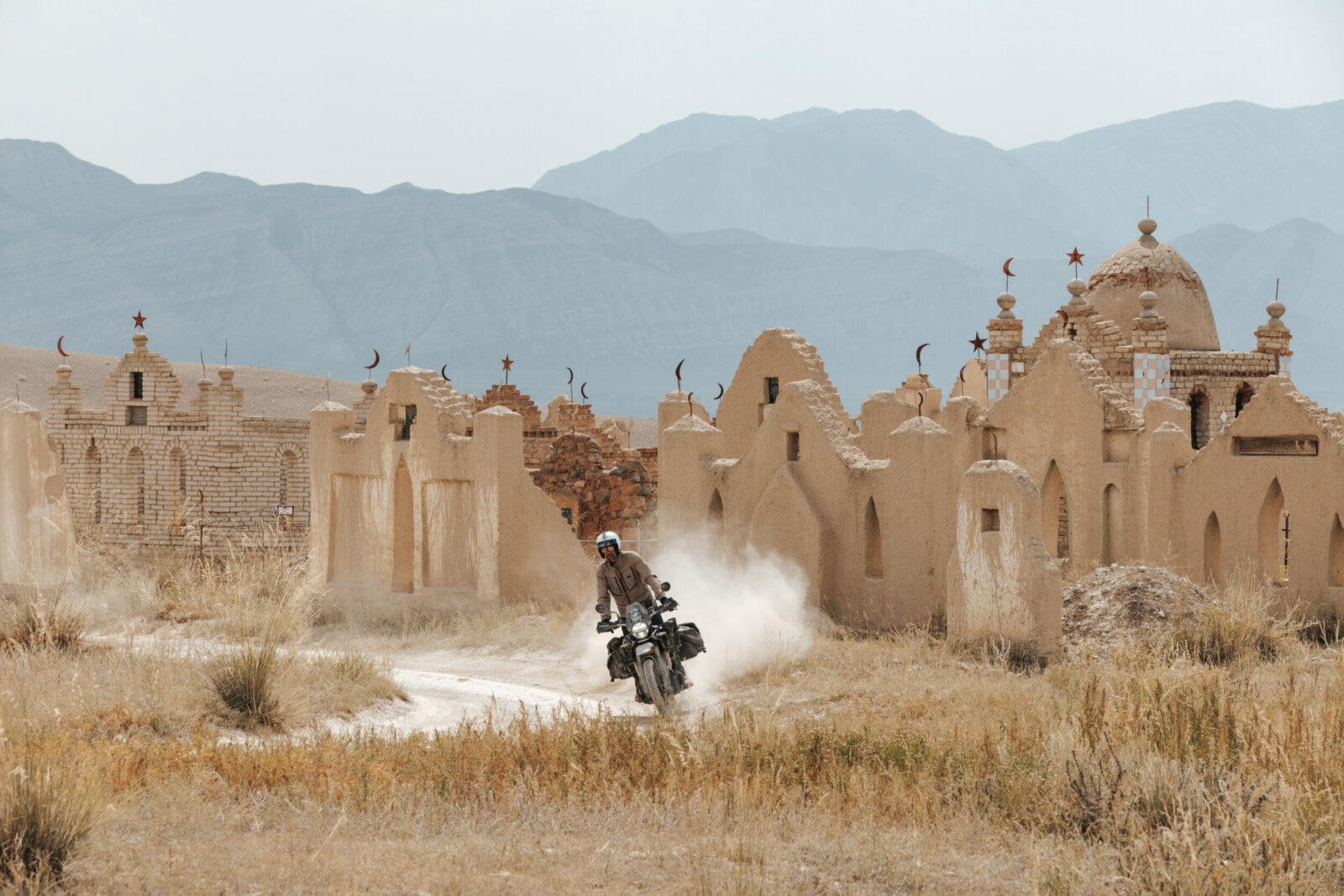
In our jargon, a “recon” is a scouting ride: the route a guide rides alone, ahead of everyone else, to prepare a future tour. “Opening up a country is incredibly exciting,” Johann smiles.
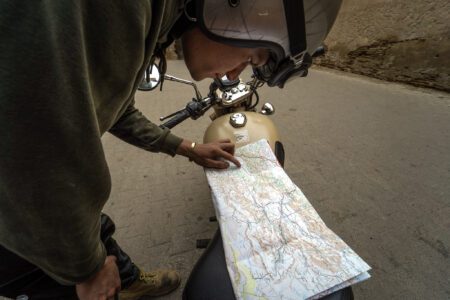
He has his method. First he defines the area with the most points of interest, gathers as much information as he can, then puts it all on a map. Start and finish in Osh, the country’s second city, at the gateway to the Fergana Valley and Uzbekistan; in between, a big loop north and east toward Song Kol lake.
His golden rule fits in one sentence: “You have to scout the hardest, so you know where you can take groups without taking risks.” On a recon, you try the tricky variants, the doubtful tracks, the uncertain passes. That unseen work is what later lets us give a group a real adventure on a route that has already been proven.
Johann, from an Indian bus to the Himalayan
Born in Belgium, a photographer in Paris for twenty years, Johann now lives in India. It all started in 1994. In his early twenties, he was backpacking on a bus “as uncomfortable as it gets” when two or three Royal Enfield Bullets passed it. “And I think to myself: what am I doing on this bus?” Ten years later, he rented his first Bullet to photograph the remote regions of India and came home “with stars in my eyes.” He has been guiding for Vintage Rides for fifteen years.
In Kyrgyzstan he rides alone, camera always within reach. “Solitude on a bike is a bubble of pleasure, of meditation. Nothing comes along to rattle you.”
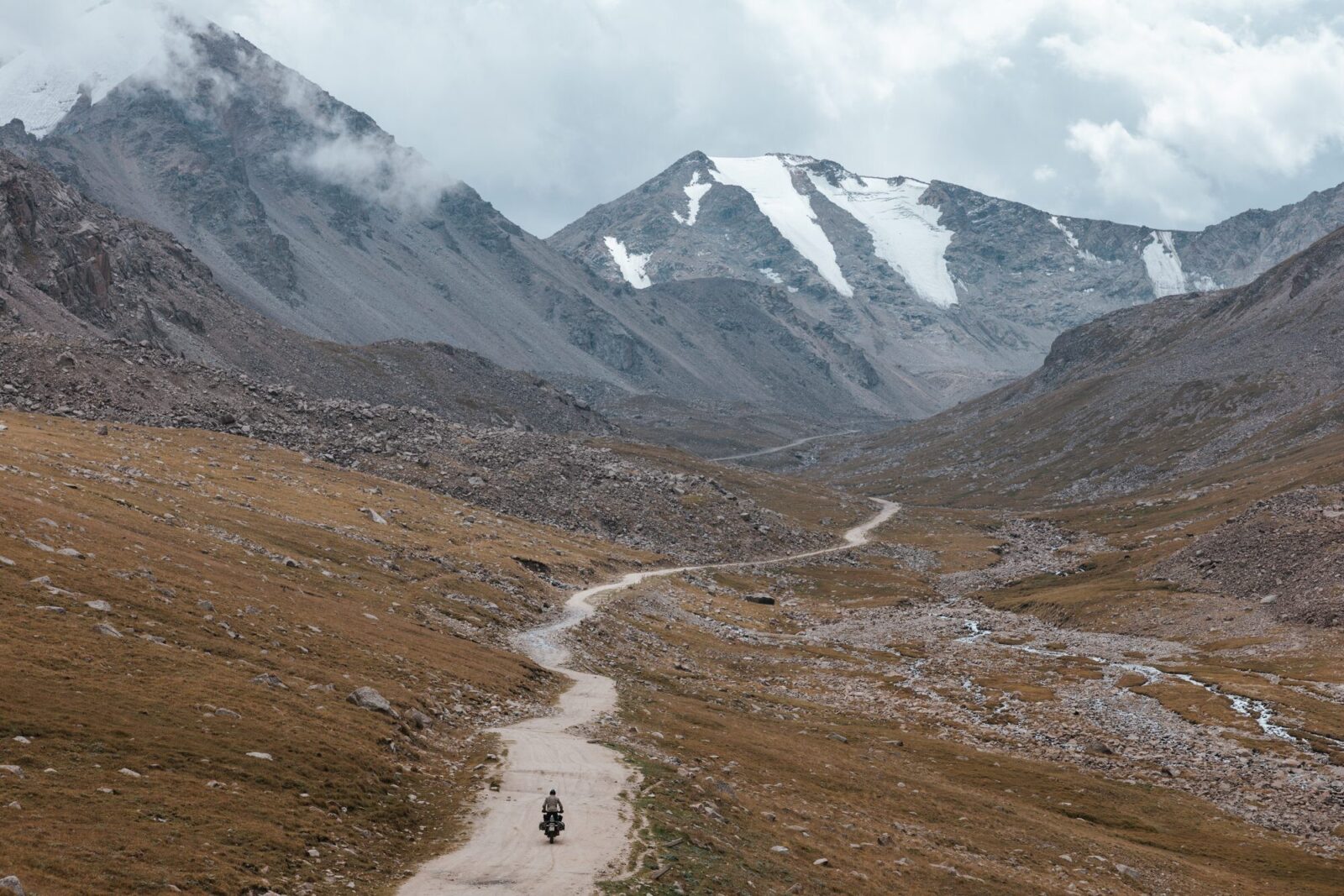
Kyrgyzstan by motorcycle, as seen in the film
Landscapes that change every 20 miles
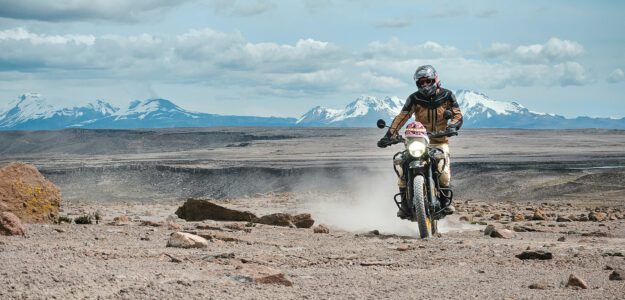
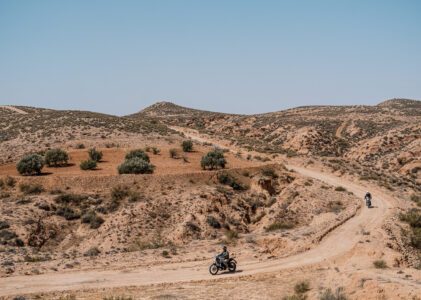
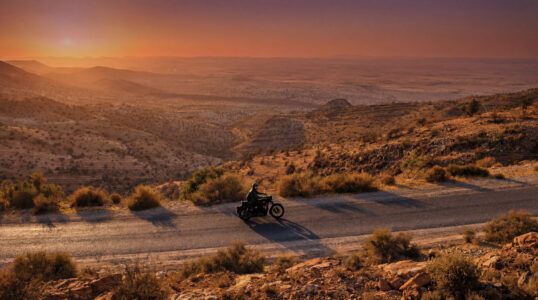
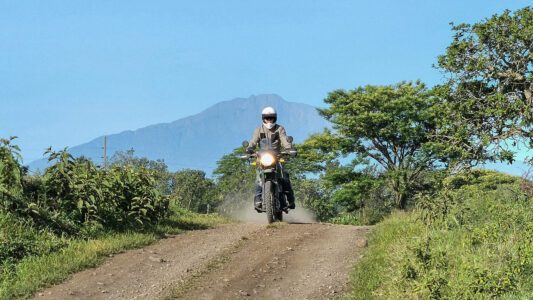
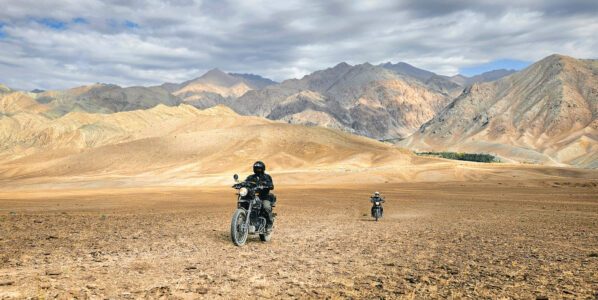
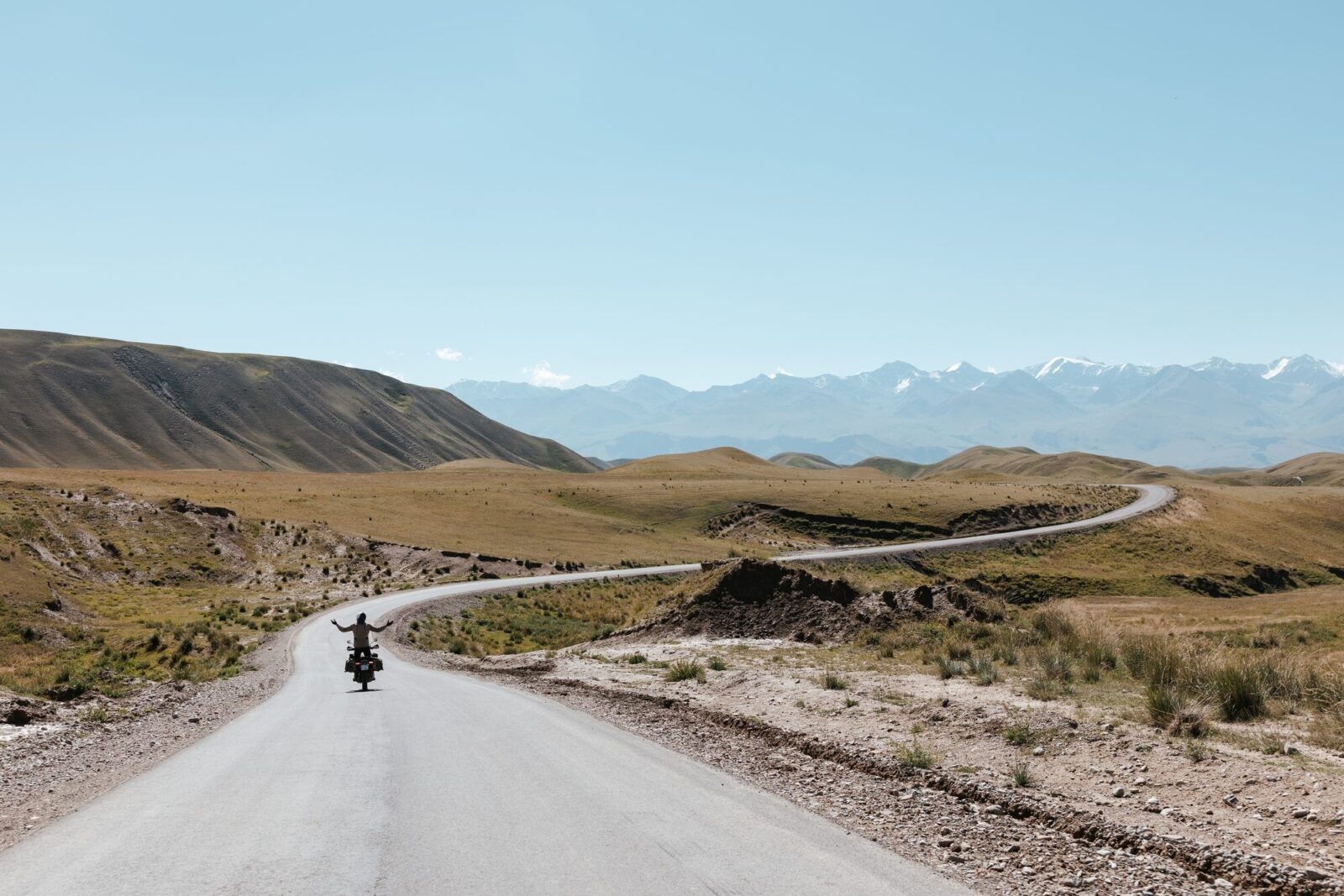
By the second day, Johann has counted four or five different settings. “Every 30, 40 km [20 to 25 miles], it changes.” A gorge with a touch of Colorado, then a valley of pine trees and rivers you would swear was Swiss, then red badlands and high plateaus of short grass where the only company is the herds. More than 40% of the country lies above 10,000 ft: the passes come one after another, at 10,000, 11,500, sometimes 13,000 ft.
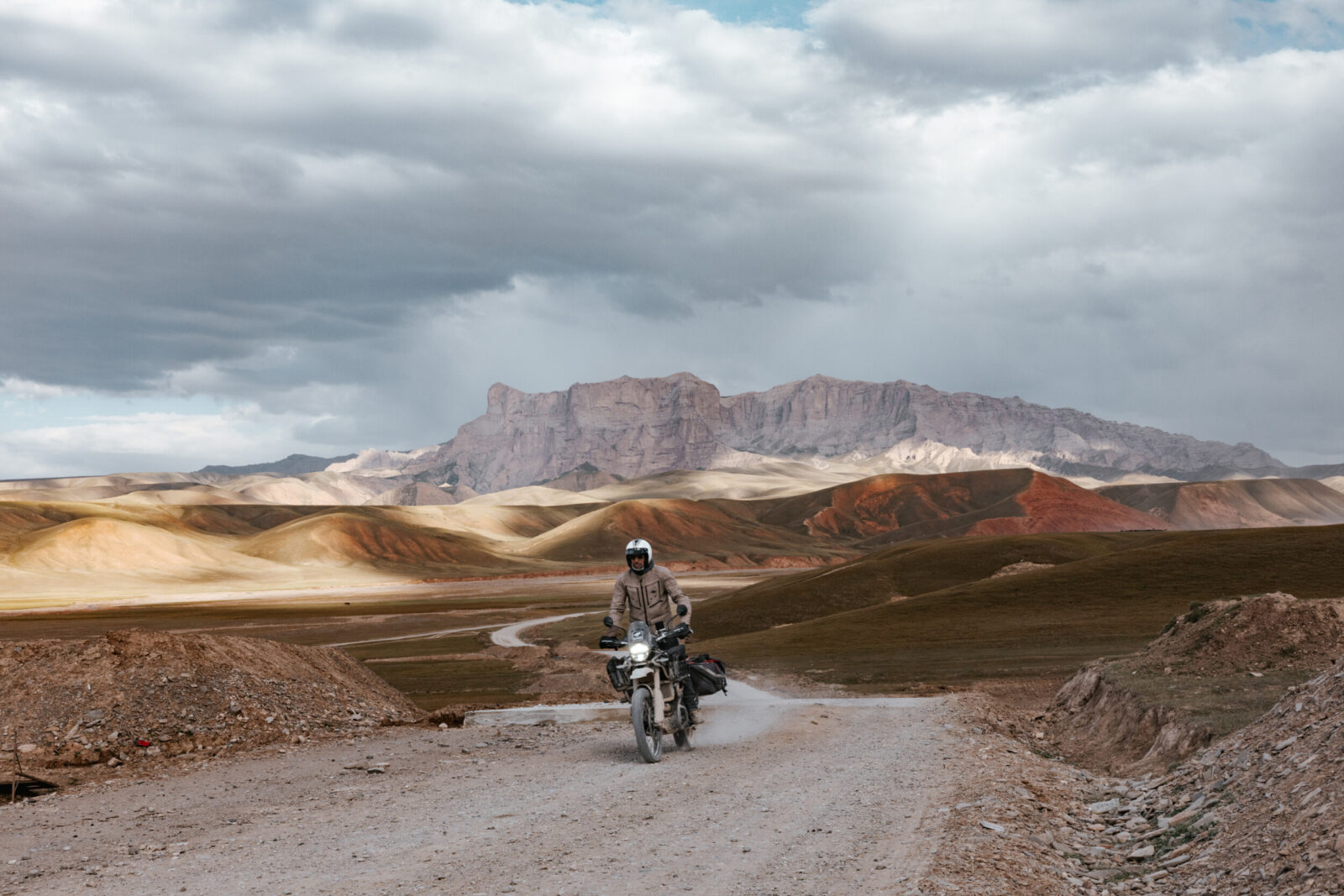
Song Kol, the shock of altitude
On satellite views, Song Kol (Song-Köl, also spelled Son Kul) looks like “a nice little lake.” On the ground, it is another story: a lake perched above 10,000 ft, some 60 miles around, in the middle of immense alpine pastures. “But you don’t expect anything this vast.” It is one of the high points of the film, and one of the highlights of the future tour.
The horse, the other mount
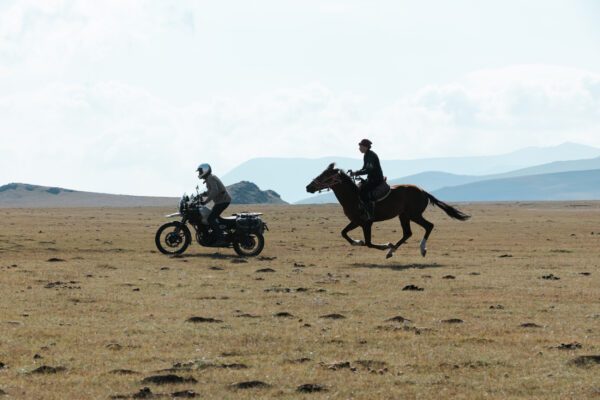
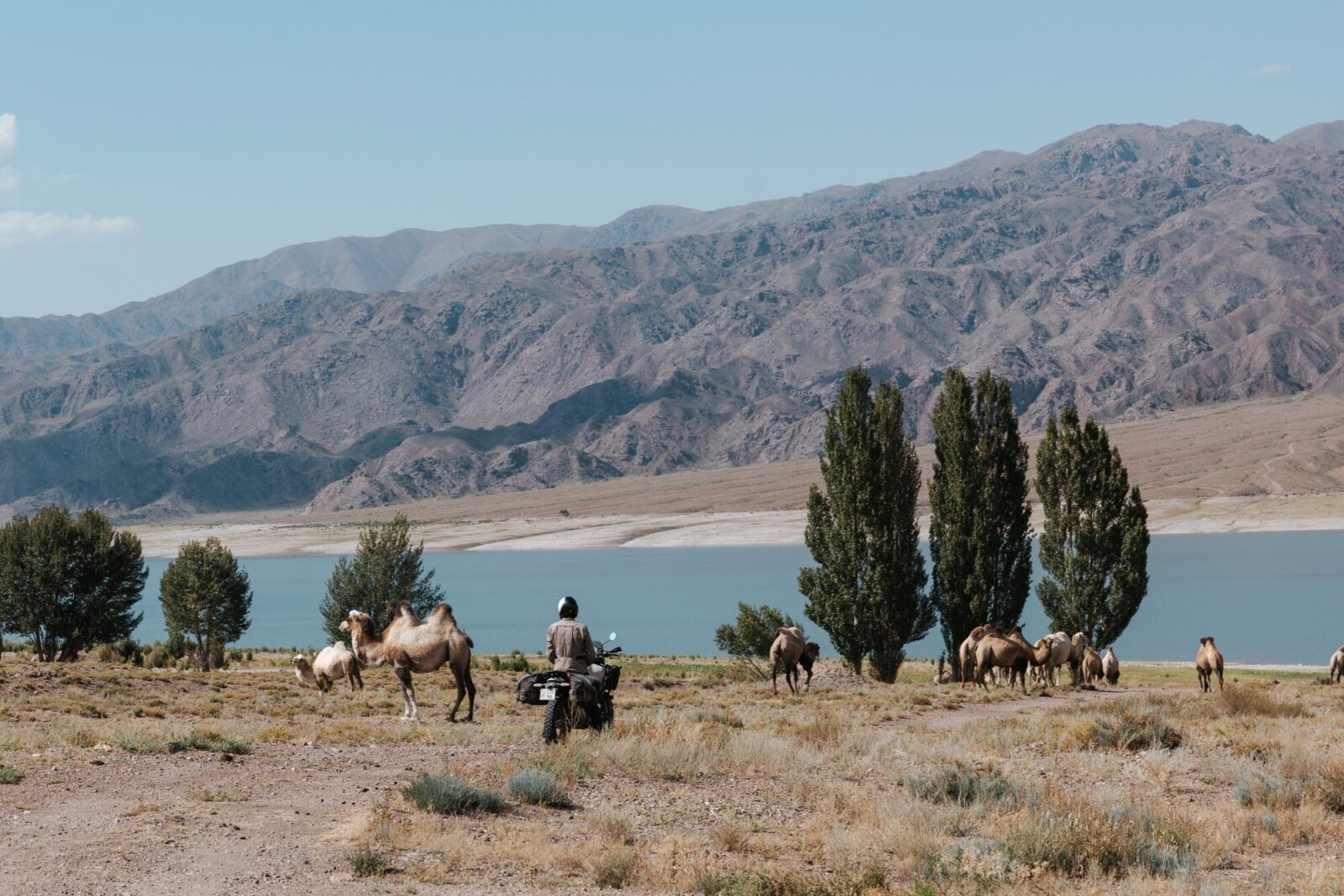
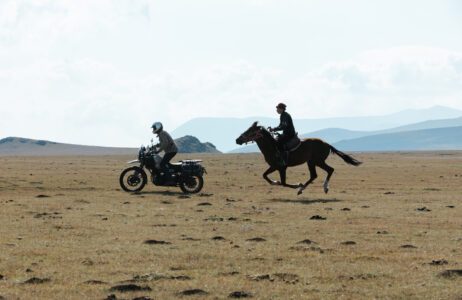
In the jailoos, the high summer pastures where herders move up to live in yurts with their herds all summer, the horse holds the place the motorcycle holds for Johann. Round a bend in the track, he meets a young rider on his racehorse. The challenge is on: who is faster, the horse or the Himalayan and its 40 horsepower? Johann’s verdict: “In an endurance race, I’d win; in a sprint, he wins.” A little further on, Bactrian camels, now rare, watch him pass, engine off.
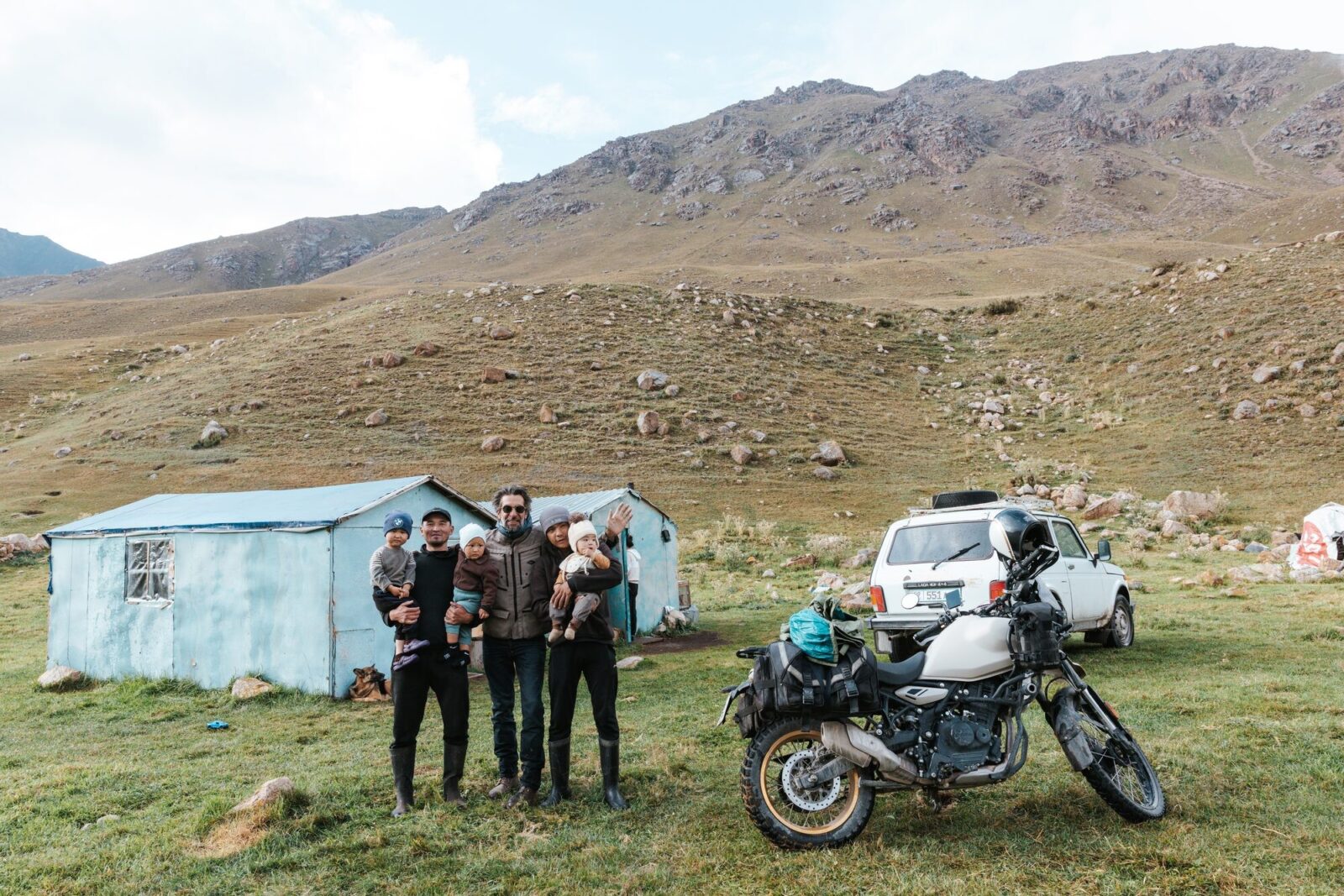
Hospitality, unfiltered
The film hides nothing of the realities of a country that is only just opening up. In Kazarman, the first morning starts with no water and no coffee: “On the accommodation, that needs work.” In the villages, finding a shop for a lunch of yogurt, cheese, and tomatoes can take a while. He is offered kumis, fermented mare’s milk and the national drink.
Then, on a rainy day, a family of herders opens the door of their summer house to him: tea, bread, jams. “We love guests. It’s the Kyrgyz way,” they tell him. Johann draws a lesson from it: “It’s always the people with the least, who don’t have much to offer you, who welcome you best.” Further on, a yurt “like in the pictures” and a traditional celebration he is invited to on the spur of the moment.
The Tosor Pass, into pure rock
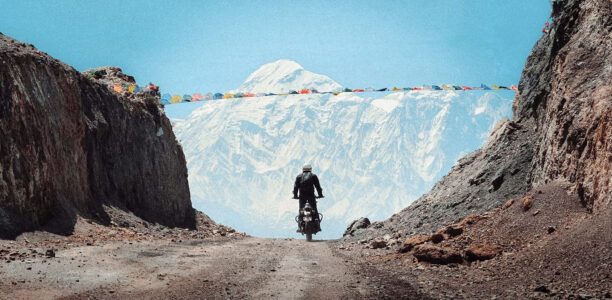
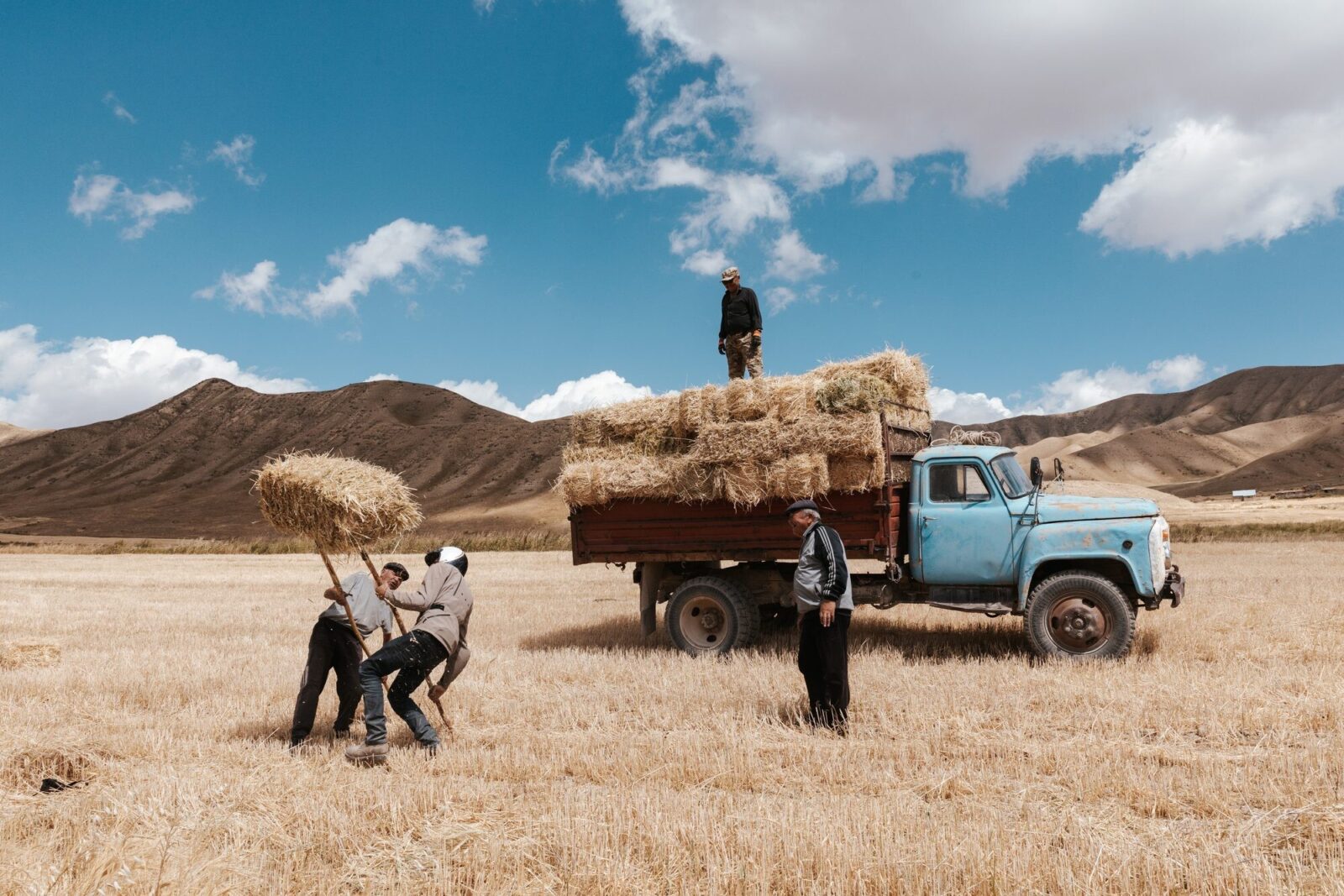
The village of Tosor is the last place to stock up before tackling the Tian Shan. Above it, the Tosor Pass, at 12,772 ft (3,893 m), the highest point of the recon, which the tour does not cross. “Change of scenery, you’re into pure rock.” On the way down, a postcard scene: men pitching hay by hand onto an old GAZ truck.
From recon to tour
This scouting ride gave birth to The Nomad Odyssey, our first motorcycle tour in Kyrgyzstan: 11 days and 1,122 miles on a loop from Osh, on the Royal Enfield Himalayan 450. On the program: Uzgen and the walnut forest of Arslanbob, the Naryn gorges, the Ala-Bel pass at 10,420 ft, the red cliffs of the Kokomeren, two nights in a yurt on the shore of Song Kol, Kol-Suu lake, perched at around 11,500 ft, the stone caravanserai of Tash Rabat, then the badlands and wild passes that lead back to Kazarman and Osh.
The film also shows what a recon changes in practice. A day without hot water is fine when you are alone; a group needs reliable stops after long hours on the tracks. “At 55, you can’t sleep just anywhere and eat just anything, you need a minimum.” The route takes that into account: nights in guesthouses and yurts, an easier day at Song Kol to acclimatize to the altitude, and a pace that leaves room for encounters.
The tour is graded Sustained and is meant for experienced riders who are comfortable on dirt tracks: long stages, nights above 10,000 ft, help far away. An English-speaking motorcycle guide, a mechanic and a support vehicle travel with the group, on full board.
Three departures are open in 2027: June 22 to July 2, July 20 to 30, and August 3 to 13, from $4,490 per rider and $3,290 per passenger. François Combes, the very guide who dreamed of the country in 2019, will lead the first ones. Season, visa, safety: all the practical answers are on our Kyrgyzstan motorcycle tour page.
The film crew
Directed by Gary Grabli, a Russian-speaking senior reporter who won the locals over, and edited by Sébastien Sega (Arte, France Télévisions, Netflix, Canal+, Special Jury Prize at FIGRA 2022), the film has its own photographer, Damien Lorrai, who took every image in this article.
Where to watch “Iron Horse Nomad Trails”?
The film is out on October 15, 2026, on the Vintage Rides YouTube channel, with subtitles in English, French, and German. Subscribe to be notified when it is released.
At the end of his recon, Johann has his verdict: “Welcoming people, smiling and easy to approach, a country that’s 90% mountains, with lots of tracks. Tourism here is just starting, nothing is overdone.” The backbone is in place. All that is missing now is the riders.
Discover The Nomad Odyssey tour
Photos © Damien Lorrai / Vintage Rides




 France
 United States
 United Kingdom
 Deutschland
 Euro (€)
 US Dollar ($)


